Using Your Phone As A Microscope On The Electronics Workbench

One aspect of working for Hackaday comes in our regular need to take good quality photographs for publication. I have a semi-decent camera that turns my inept pointing and shooting into passably good images, but sometimes the easiest and quickest way to capture something is to pull out my mobile phone.

It’s a risky step because phone camera modules and lenses are tiny compared to their higher quality cousins, and sometimes the picture that looks good on the phone screen can look awful in a web browser. You quickly learn never to zoom on a mobile phone camera because it’s inevitably a digital zoom that simply delivers grainy interpolated pictures.

That’s not to say that the zoom can’t be useful. Recently I had some unexpected inspiration when using a smartphone camera as a magnifier to read the writing on a chip. I don’t need an archival copy of the image… I just needed a quick magnifying tool. Have I been carrying a capable magnifier for soldering in my pocket or handbag for years without realising it? I decided to give it a try and it worked okay with a few caveats. While I have seen optics turn these cameras into pretty good microscopes, my setup added nothing more than a phone tripod, and will get you by in a pinch.

Continue reading “Using Your Phone As A Microscope On The Electronics Workbench”

Sewage Maceration Is As Gross As It Sounds

Day to day, few of us really contemplate what’s happening on a deep, mechanical level when we use the toilet. The business is done, the toilet is flushed, and we go about our day. However, the magnificent technology of indoor sanitation should not be sniffed at, given the manner in which it facilitates a cleaner, more comfortable existence for us all.

The vast majority of flush toilets rely on the benefit of gravity to remove waste from the house. This necessitates that the toilet be installed above the sewage lines that exit the house. For most installations at ground floor and above, this isn’t a problem. However, on occasions you may encounter basements or houses with rooms at lower levels where a regular toilet simply won’t work. Obviously, a pump is in order, but human sewage being a mixture of liquids and solids makes this impractical. Instead, it must be turned into a slurry that can be pumped; a process known as sewage maceration. Buckle up!

Continue reading “Sewage Maceration Is As Gross As It Sounds”

Machine Learning In The Kitchen Makes For Tasty Mashup Desserts

What did you do during lockdown? A whole lot of people turned to baking in between trips to the store to search for toilet paper and hand sanitizer. Many of them baked bread for some reason, but like us, [Sara Robinson] turned to sweeter stuff to get through it.

The first Cakie ever made. Image via Google Cloud

Her pandemic ponderings wandered into the realm of baking existentialist questions, like what separates baked goods from each other, categorically speaking? What is the science behind the crunchiness of cookies, the sponginess of cake, and the fluffiness of bread?

As a developer advocate for Google Cloud, [Sara] turned to machine learning to figure out why the cookie crumbles. She collected 33 recipes each of cookies, cake, and bread and built a TensorFlow model to analyze them, which resulted in a cookie/cake/bread lineage for each recipe in a set of percentages. Not only was the model able to accurately classify recipes by type, [Sara] was able to use the model to come up with a 50/50 cookie-cake hybrid recipe. The AI delivered a list of ingredients to which she added vanilla extract and chocolate chips for flavor. From there, she had to wing it and come up with her own baking directions for the Cakie.

Continue reading “Machine Learning In The Kitchen Makes For Tasty Mashup Desserts”

Learn Bil Herd’s DIY Surface Mount Assembly Process

You can do your own Surface Mount Technology based PCB assembly with just a handful of tools and some patience. At the heart of my SMT process is stopping to inspect the various steps all while trying to maintain a bit of cleanliness in the process.

Surface mount or Surface Mount Technology (SMT) is the modern way to assemble Printed Circuit Boards (PCB) and is what is commonly seen when opening a modern piece of tech. It’s much smaller than the older Through-Hole (TH) technology where the component leads were inserted into holes in PCB, and act we called “stuffing” since we had to stuff the components into the holes.

A few specialized tools make this a lot easier, but resourceful hackers will be able to pull together a solder paste stencil jig, vacuum tweezers, and a modified toaster oven with a controller that can follow the reflow profile of the solder paste. Where you shouldn’t skimp is on the quality, age, and storage of the solder paste itself.

Join me after the break for my video overview of the process I use in my workshop, along with details of every step of my SMT assembly process.

Continue reading “Learn Bil Herd’s DIY Surface Mount Assembly Process”

It Costs WHAT?! A Sounding Into Hearing Aids

We are accustomed to medical devices being expensive, but sometimes the costs seem to far exceed reasonable expectations. At its most simplistic, a hearing aid should just be a battery, microphone, amplifier, and speaker, all wrapped in an enclosure, right? These kinds of parts can be had for a few dimes, so why do modern hearing aids cost thousands of dollars, and why can’t they seem to go down in price?

Continue reading “It Costs WHAT?! A Sounding Into Hearing Aids”

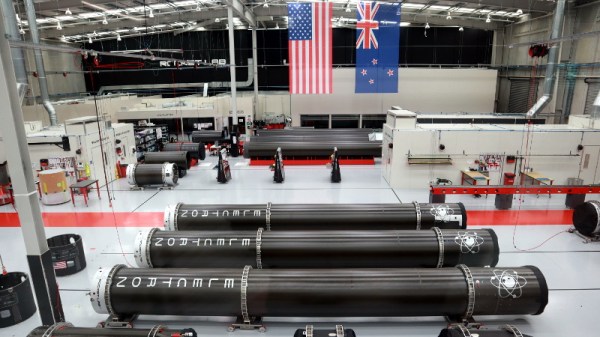
Sirius XM Satellite Failure A Reminder That Space Is Risky (And That Satellite Insurance Is A Thing)

It’s easy to imagine that once a spacecraft leaves Earth’s atmosphere and is in a stable orbit, the most dangerous phase of the mission is over. After all, that’s when we collectively close the live stream and turn our attentions back to terrestrial matters. Once the fire and fury of the launch is over with, all the excitement is done. From that point on, it’s just years of silently sailing through the vacuum of space. What’s the worst that could happen?

Unfortunately, satellite radio provider Sirius XM just received a harsh reminder that there’s still plenty that can go wrong after you’ve slipped Earth’s surly bonds. Despite a flawless launch in early December 2020 on a SpaceX Falcon 9 and a reportedly uneventful trip to its designated position in geostationary orbit approximately 35,786 km (22,236 mi) above the planet, their brand new SXM-7 broadcasting satellite appears to be in serious trouble.

Maxar Technologies, prime contractor for the SXM-7, says they’re currently trying to determine what’s gone wrong with the 7,000 kilogram satellite. In a statement, the Colorado-based aerospace company claimed they were focused on “safely completing the commissioning of the satellite and optimizing its performance.” But the language used by Sirius XM in their January 27th filing with the U.S. Securities and Exchange Commission was notably more pessimistic. No mention is made of bringing SXM-7 online, and instead, the company makes it clear that their existing fleet of satellites will be able to maintain service to their customers until a replacement can be launched.

So what happened, and more importantly, is there any hope for SXM-7? Neither company has released any concrete details, and given the amount of money on the line, there’s a good chance the public won’t get the full story for some time. But we can theorize a bit based on what we do know, and make some predictions about where things go from here.

Continue reading “Sirius XM Satellite Failure A Reminder That Space Is Risky (And That Satellite Insurance Is A Thing)”

Why Blobs Are Important, And Why You Should Care

We are extraordinarily fortunate to live at a time in which hardware with astounding capabilities can be had for only a few dollars. Systems that would once have taken an expensive pile of chips and discretes along with months of development time to assemble are now integrated onto commodity silicon. Whether it is a Linux-capable system-on-chip or a microcontroller, such peripherals as WiFi, GPUs, Bluetooth, or USB stacks now come as part of the chip, just another software library rather than a ton of extra hardware.

Beware The Blob!

An ESP-01 module
The cheapest of chips still comes with a blob.

If there is a price to be paid for this convenience, it comes in the form of the blob. A piece of pre-compiled binary software that does the hard work of talking to the hardware and which presents a unified API to the software. Whether you’re talking to the ESP32 WiFi through an Arduino library or booting a Raspberry Pi with a Linux distribution, while your code may be available or even maybe open source, the blob it relies upon to work is closed source and proprietary. This presents a challenge not only to Software Libre enthusiasts in search of a truly open source computer, but also to the rest of us because we are left reliant upon the willingness of the hardware manufacturer to update and patch their blobs.

An open-source advocate would say that the solution is easy, the manufacturers should simply make their blobs open-source. And it’s true, were all blobs open-source then the Software Libre crowd would be happy and their open-source nature would ease the generation of those updates and patches. So why don’t manufacturers release their blobs as open-source? In some cases that may well be due to a closed-source mindset of never releasing anything to the world to protect company intellectual property, but to leave it at that is not a full answer. To fully understand why that is the case it’s worth looking at how our multifunctional chips are made.

Continue reading “Why Blobs Are Important, And Why You Should Care”