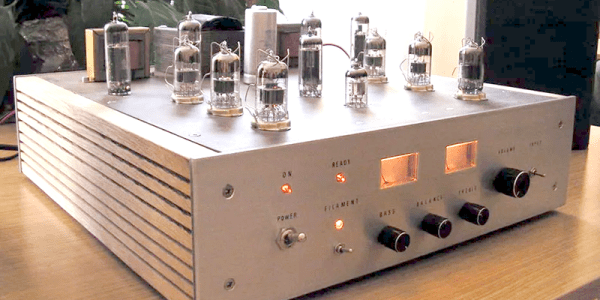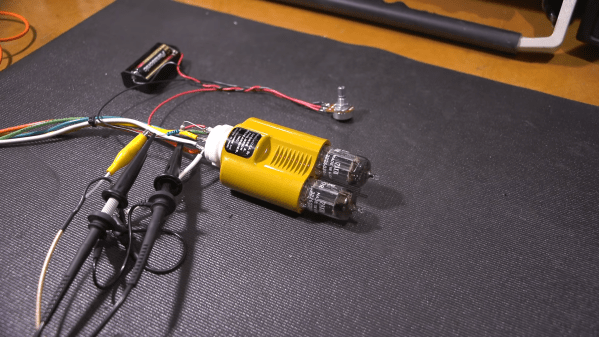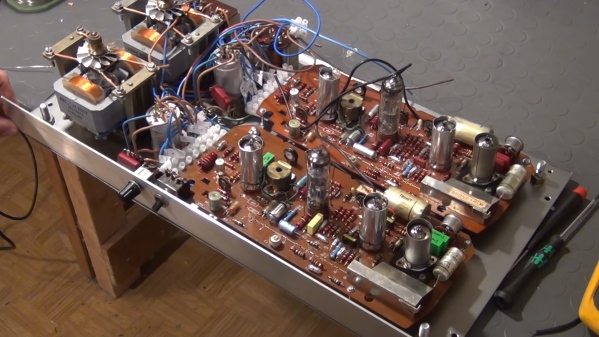
From today’s perspective, vacuum tubes are pretty low tech. But for a while they were the pinnacle of high tech, and heavy research followed the promise shown by early vacuum tubes in transmission and computing. Indeed, as time progressed, tubes became very sophisticated and difficult to manufacture. After all, they were as ubiquitous as ICs are today, so it is hardly surprising that they got a lot of R&D.
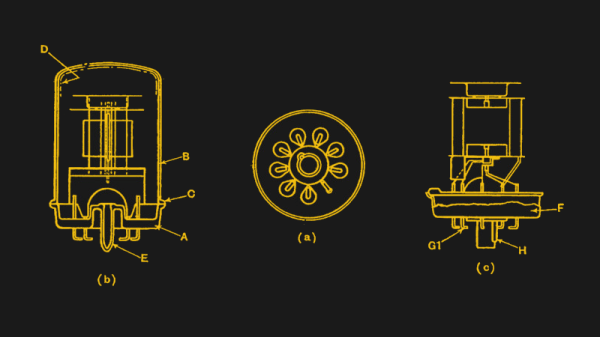
Prior to 1938, for example, tubes were built as if they were light bulbs. As the demands on them grew more sophisticated, the traditional light bulb design wasn’t sufficient. For one, the wire leads’ parasitic inductance and capacitance would limit the use of the tube in high-frequency applications. Even the time it took electrons to get from one part of the tube to another was a bottleneck.
There were several attempts to speed tubes up, including RCA’s acorn tubes, lighthouse tubes, and Telefunken’s Stahlröhre designs. These generally tried to keep leads short and tubes small. The Philips company started attacking the problem in 1934 because they were anticipating demand for television receivers that would operate at higher frequencies.
Dr. Hans Jonker was the primary developer of the proposed solution and published his design in an internal technical note describing an all-glass tube that was easier to manufacture than other solutions. Now all they needed was an actual application. While they initially thought the killer app would be television, the E50 would end up helping the Allies win the war.
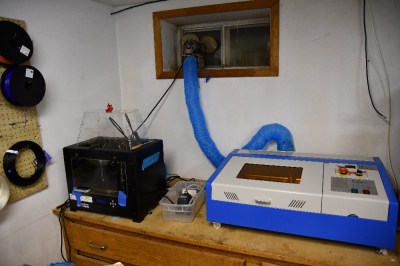 Over the last decade or so things have changed. China got involved, and suddenly there were cheap lasers on the market. Currently, there are several low-cost laser models available in various power levels. The most popular is the smallest – a 40-watt model, dubbed the K40. There are numerous manufacturers and there have been many versions over the years. They all look about the same though: A blue sheet metal box with the laser tube mounted along the back. The cutting compartment is on the left and the electronics are on the right. Earlier versions came with Moshidraw software and a parallel interface.