8-bit Computer For On-The-Go Programming

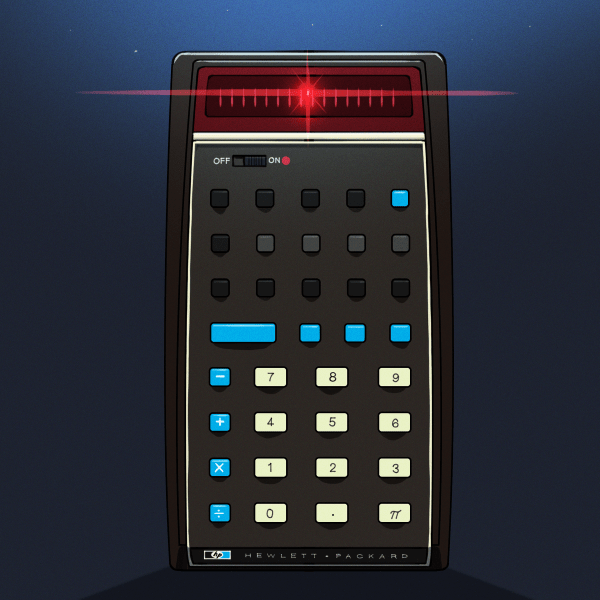
If there was one downside to 8-bit computers like the Commodore 64, it’s that they weren’t exactly portable. Even ignoring their physical size, the power requirements would likely have required a prohibitively large power bank of some sort to lug around as well. The problem of portability has been solved since the late ’70s, but if you still want that 8-bit goodness in a more modern package you’ll have to look at something like retrocomputing madman [Jack Eisenmann]’s DUO Travel computer.

The computer is based around the ubiquitous ATmega328 which should make the ease at which it is programmable apparent. Even so, its 14-button keypad makes it programmable even without another computer. While it has slightly less memory than a standard C-64, it’s still enough for most tasks. And, since its powered by a 9-volt battery it doesn’t require any external power sources either.

The most impressive part of the build, however, is the custom programming language specifically tailored for this platform. After all, a 14-button keypad wouldn’t be a great choice if you had to program in Perl or C all the time. There is some example code on the project page for anyone interested in this specific implementation. While it’s not the most minimal computer [Jack] has ever built, it’s certain to be much more practical.

Continue reading “8-bit Computer For On-The-Go Programming”

Homemade Computer From 1970s Chips

Sometimes it starts with a 555 timer and an op-amp. Other times with a small microcontroller. But the timing’s not so great and needs a dedicated timing crystal circuit. And maybe some more memory, and maybe the ATtiny should be swapped out for some 74LS-series chips. And now of course it needs video output too. Before you know it, you’re staring at a 40-chip computer that hearkens back to a simpler, yet somehow more complex, time of computing. At least that’s where [Marcel] is with his breadboard computer based on 1970s-era chips.

For what it does, this homebrew computer is relatively simple and straightforward. It gets 8 bits of processing power from 34 TTL chips. Another 6 round out the other features needed for the computer to operate. It is capable of rendering 64 colors in software and has more than enough memory for a computer of this sort. So far the only recurring problem [Marcel] has had has been with breadboard fatigue, as some of the chips keep popping out of the sockets.

This is a great project for anyone interested in homebrew or 8-bit computing, partially because of some of the self-imposed limitations that [Marcel] imposed on himself, like “only chips from the 70s”. It’s an impressive build on its own and looks to get much better since future plans call for a dedicated PCB to solve the issue with the worn-out breadboards. If you’re already invested in a project like this, don’t forget that the rabbit hole can go a little deeper: you can build a computer out of discrete transistors as well.

Hackaday Prize Entry: Oscilloscope For The Masses

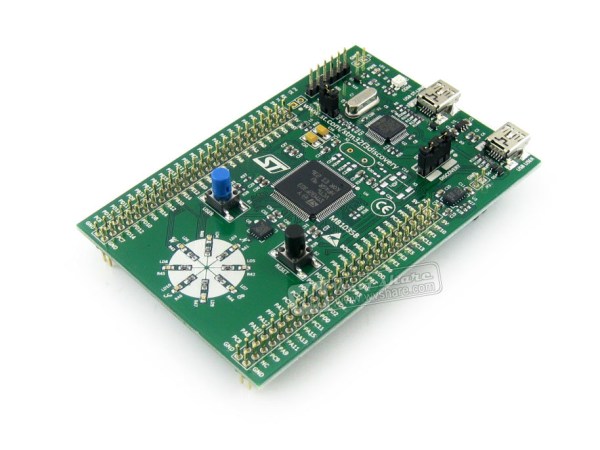
If you head down to your local electronics supply shop (the Internet), you can pick up a quality true-RMS multimeter for about $100 that will do almost everything you will ever need. It won’t be able to view waveforms, though; this is the realm of the oscilloscope. Unlike the multimeter’s realistic price point, however, a decent oscilloscope is easily many hundreds, and often thousands, of dollars. While this is prohibitively expensive for most, the next entry into the Hackaday Prize seeks to bring an inexpensive oscilloscope to the masses.

The multiScope is built by [Vítor] and is based on the STM32-O-Scope which is built around a STM32F103C8T6 microcontroller. This particular chip was chosen because of its high clock speed and impressive analog-to-digital resolution, which are two critical specifications for any oscilloscope. This particular scope has an inductance meter built-in as well, which is another feature which your otherwise-capable multimeter probably doesn’t have.

New features continue to get added to this scope by [Vítor]. Most recently he’s added features which support negative voltages and offsets. His particular scope is built inside of a model car, too, but we believe this to be an optional feature.

New Take On The Binary Clock

By now it might seem like there’s no new way to build a binary clock. It’s one of the first projects many build to try out their first soldering irons, so it’s a well-traveled path. Every now and then, however, there’s a binary clock that takes a different approach, much like [Stephen]’s latest project which he calls the byte clock.

The clock works by dividing the 24-hour day into half and using an LED to represent this division, which coincidentally works out to representing AM or PM. The day is divided in half over and over again, with each division getting its own LED. In order to use this method to get one-second resolution it would need 16 LEDs, but since that much resolution isn’t too important for a general-use clock, [Stephen] reduced this to eight.

Additionally, since we’re in the Internet age, the clock has built-in WiFi courtesy of a small version of Python called WiPy which runs on its own microcontroller. A real-time clock rounds out the build and makes sure the clock is as accurate as possible. Of course an RTC might not have the accuracy as some other clocks, but for this application it certainly gets the job done.

New Brain For Smart Vacuum

The ESP8266 has found its way into almost everything now. With its tiny size, low price tag, and accessible programmer, it’s perfect for almost any application that requires WiFi. [HawtDogFlvrWtr] decided that will all of the perks of the platform, an ESP8266 was practically begging to be shoehorned into his automatic vacuum cleaner. This isn’t a Roomba, though, it’s a Neato that now has a custom WiFi interface.

The new WiFi modification comes with some additional features as well. First of all, it ditches the poorly designed default user interface (often the most annoying proprietary component of any consumer product). In addition, the vacuum can now be placed on a completely custom schedule and can also be deployed at the push of a button. Now that it has a custom interface, it can report its status over the network to a phone or other computer as well.

[HawtDogFlvrWtr] is still developing his project and it looking for some help beta testing his new platform. He also has how to videos on his project page if you’re in the process of tearing apart your own. There are many other ways of modifying vacuum cleaners to add other useful features as well.

Continue reading “New Brain For Smart Vacuum”

How Smart Is The Grid?

Marketing and advertising groups often have a tendency to capitalize on technological trends faster than engineers and users can settle into the technology itself. Perhaps it’s no surprise that it is difficult to hold back the motivation to get a product to market and profit. Right now the most glaring example is the practice of carelessly putting WiFi in appliances and toys and putting them on the Internet of Things, but there is a similar type of fiasco playing out in the electric power industry as well. Known as the “smart grid”, an effort is underway to modernize the electric power grid in much the same way that the Internet of Things seeks to modernize household appliances, but to much greater and immediate benefit.

A Cutler-Hammer industrial breaker ominously predicts the coming confusion in the smart grid arena.
Photo by Bryan Cockfield

To that end, if there’s anything in need of modernization it’s the electric grid. Often still extensively using technology that was pioneered in the 1800s like synchronous generators and transformers (not to mention metering and billing techniques that were perfected before the invention of the transistor), there is a lot of opportunity to add oversight and connectivity to almost every part of the grid from the power plant to the customer. Additionally, most modern grids are aging rapidly at the same time that we are asking them to carry more and more electricity. Modernization can also help the aging infrastructure become more efficient at delivering energy.

While the term “smart grid” is as nebulous and as ill-defined as “Internet of Things” (even the US Government’s definition is muddied and vague), the smart grid actually has a unifying purpose behind it and, so far, has been an extremely useful way to bring needed improvements to the power grid despite the lack of a cohesive definition. While there’s no single thing that suddenly transforms a grid into a smart grid, there are a lot of things going on at once that each improve the grid’s performance and status reporting ability.

Continue reading “How Smart Is The Grid?”

Detect Lightning Strikes With Audio Equipment

One of the driving principles of a lot of the projects we see is simplicity. Whether that’s a specific design goal or a result of having limited parts to work with, it often results in projects that are innovative solutions to problems. As far as simplicity goes, however, the latest project from [153armstrong] takes the cake. The build is able to detect lightning using a single piece of equipment that is almost guaranteed to be within a few feet of anyone reading this article.

The part in question is a simple, unmodified headphone jack. Since lightning is so powerful and produces radio waves in many detectable ranges, it doesn’t take much to detecting a strike within a few kilometers. Besides the headphone jack, a computer with an audio recording program is also required to gather data. (Audio is often used as a stand-in for storing other types of data; in this case, RF information.) [153armstrong] uses a gas torch igniter as a stand-in for a lightning strike, but the RF generated is similar enough to test this proof-of-concept. The video of their tests is after the break.

Audacity is a great tool for processing audio, or for that matter any other data that you happen to be gathering using a sound card. It’s open source and fairly powerful. As far as lightning goes, however, it’s possible to dive far down the rabbit hole. Detecting lightning is one thing, but locating it requires a larger number of weather stations.

Continue reading “Detect Lightning Strikes With Audio Equipment”