A New Way To Remote Terminal

Thanks to the wonders of the internet, collaborating with others across great distances has become pretty simple. It’s easy now to share computer desktops over a network connection, and even take control of another person’s computer if the need arises. But these graphical tools are often overkill, especially if all we really need is to share a terminal session with someone else over a network.

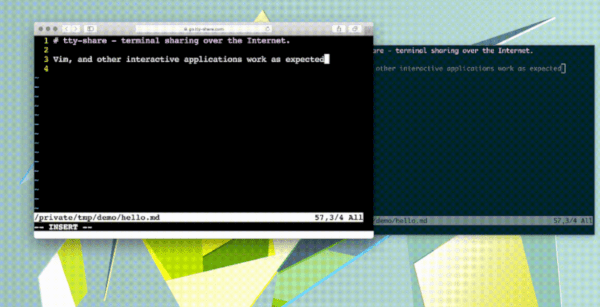
A new project from [Elis] allows just that: to share an active terminal session over a web browser for anyone else to view. The browser accesses a “secret” URL which grants access to the terminal via a tunnel which is able to live stream the entire session. The server end takes care of all of the work of generating this URL, and it is encrypted with TLS and HTTPS. It also allows for remote control as well as viewing, so it is exceptionally well-featured for being simple and easy to run.

To run this software only a binary is needed, but [Elis] has also made the source code available. Currently he finds it a much more convenient way of administering his Raspberry Pi, but we can see a lot of use for this beyond the occasional headless server. Certainly this makes remote administration easy, but could be used collaboratively among a large group of people as well.

DEF CON 27: The Badge Talk; Or That One Time Joe Grand Sourced 30,000 Gemstones

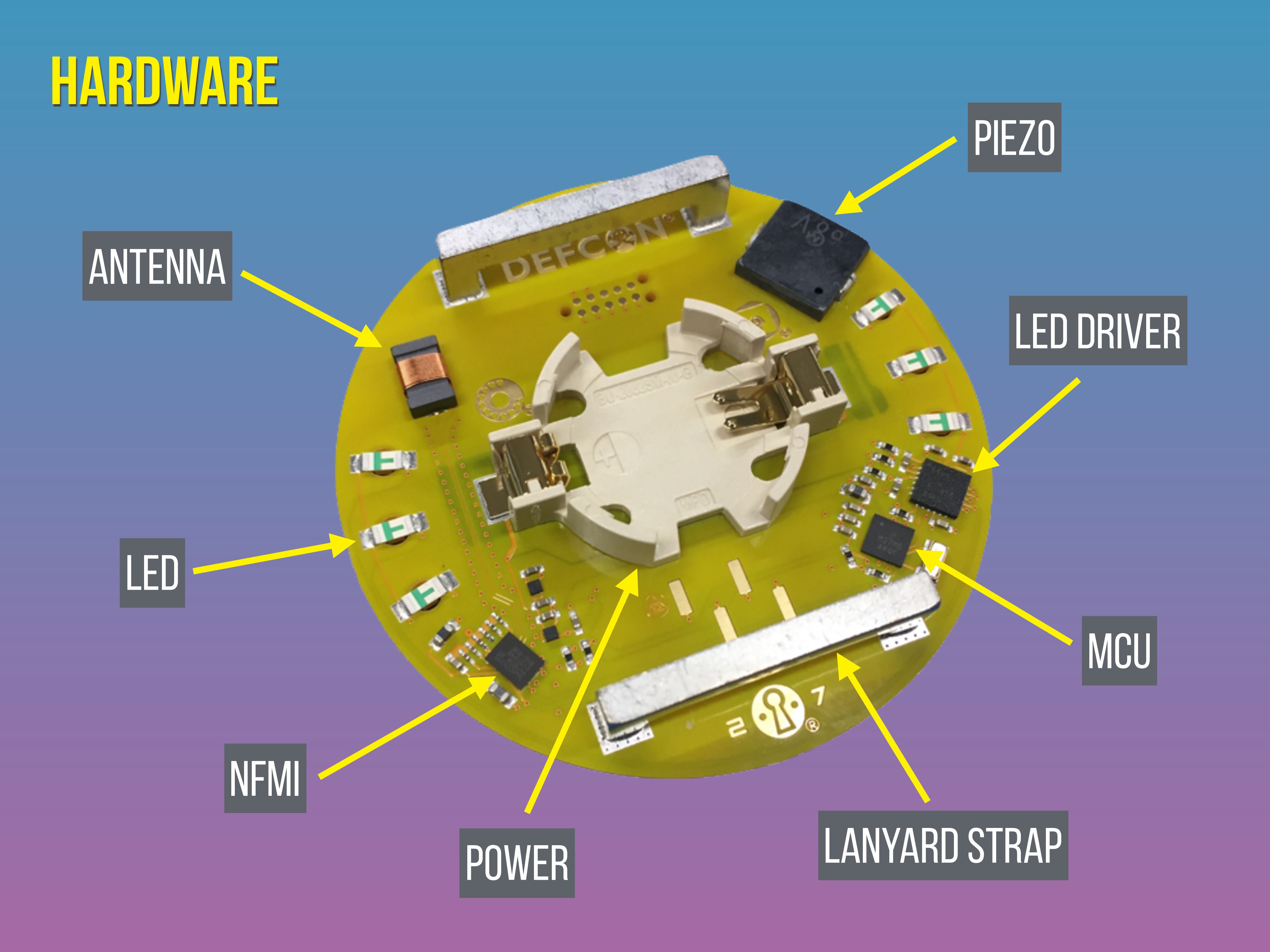
Yesterday we published a first look at the hardware found on the DEF CON 27 badge. Sporting a magnetically coupled wireless communications scheme rather than an RF-based one, and an interesting way to attach the lanyard both caught my attention right away. But the gemstone faceplate and LED diffuser has its own incredible backstory you don’t want to miss.

This morning Joe Grand — badge maker for this year and many of the glory years of hardware badges up through DC18 — took the stage to share his story of conceptualizing, prototyping, and shepherding the manufacturing process for 28,500 badges. Imagine the pressure of delivering a delightful concept, on-time, and on budget… well, almost on budget. During the talk he spilled the beans on the quartz crystal hanging off the front side of every PCB.

Continue reading “DEF CON 27: The Badge Talk; Or That One Time Joe Grand Sourced 30,000 Gemstones”

3D Printing Makes Modular Payload For Model Rocket

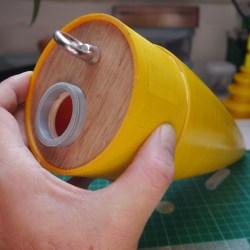
Putting payloads into model rockets can be more complex than simply shoving stuff into an open spot, so [concretedog] put some work into making a modular payload tube for his current rocket. The nose cone for his rocket is quite large, so he opted to give it a secure payload area that doesn’t compromise or interfere with any of the structural or operational bits such as the parachute.

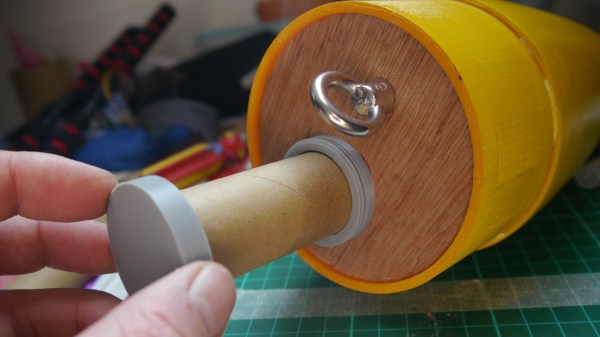
The payload container is a hollow tube with a 3D printed threaded adaptor attached to one end. Payload goes into the tube, and the tube inserts into a hole in the bulkhead, screwing down securely. The result is an easy way to send up something like a GPS tracker, possibly with a LoRa module attached to it. That combination is a popular one with high-altitude balloons, which, like rockets, also require people to retrieve them after not-entirely-predictable landings. LoRa wireless communications have very long range, but that doesn’t help if there’s an obstruction like a hill between you and the transmitter. In those cases, a simple LoRa repeater attached to a kite, long pole, or drone can save the day.
We’ve seen [concretedog]’s work before, when he designed stackable PCBs intended to easily fit inside model rocket bodies, allowing for easy integration of microcontroller-driven functions like delayed ignitions or altimeter triggers. Better development tools, hardware, and 3D printing has really helped make smarter rocketry more accessible to hobbyists.

A Macro Keyboard In A Micro Package

Remember back in the early-to-mid 2000s when pretty much every cheap USB keyboard you could find started including an abundance of media keys in its layout? Nowadays, especially if you have a customized or reduced-sized mechanical keyboard, those are nowhere to be seen. Whenever our modern selves need those extra keys, we have to turn to external peripherals, and [Gary’s] Knobo is one that looks like it could’ve come straight out of a fancy retail package.

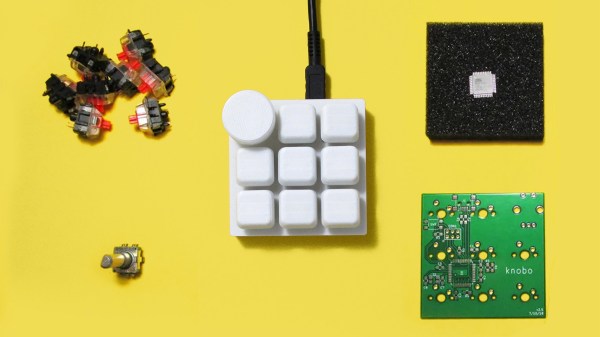
The Knobo is a small macro keypad with 8 mechanical Cherry-style keys and a clickable rotary encoder knob as its main feature. Each key and knob gesture can be customized to any macro, and with five gestures possible with the knob, that gives you a total of thirteen inputs. On top of that, the build and presentation look so sleek and clean we’d swear this was a product straight off of Teenage Engineering’s money-printing machine.

The actions you can do with those inputs range from simple media controls with a volume knob all the way to shortcuts to make a Photoshop artist’s life easier. Right now you can only reprogram the Knobo’s Arduino-based firmware with an In-Circuit Serial Programmer to change what the inputs do, but [Gary] is currently working on configuration software so that users without any programming knowledge will be able to customize it too.

Knobs are just one of those things that everyone wants to use to control their computers, much like giant red buttons. Alternative input devices can range from accessibility-designed to just downright playful. Whatever the inspiration is for them, it’s always nice to see the creativity of these projects.

Continue reading “A Macro Keyboard In A Micro Package”

Eric Weinhoffer Covers Enclosure Design And Manufacturing Tech During Hackaday Prize Mentor Session

Eric Weinhoffer has had plenty of experience in the product design arena, and this hard-earned knowledge is readily apparent in his mentor session for The Hackaday Prize. These serve to link up Prize entrants with industry experts in order to help them take their projects into production. You still have time to get in on the 2019 Hackaday Prize which is accepting entries until August 25th.

Eric’s work as a Prototype Engineer at Bolt stands him in good stead to deliver valuable advice on manufacturing techniques and prototyping. With projects as diverse as CNC milling machiness and ISS payloads under his belt, Eric was able to help out these entrants with a series of tricky problems that will be familiar to anyone who has tried to take a project out of the lab and into the market.

Let’s take a look at the projects and the advice that were shared during this session.

Continue reading “Eric Weinhoffer Covers Enclosure Design And Manufacturing Tech During Hackaday Prize Mentor Session”

Hackaday Podcast 030: Seven Years Of RTL-SDR, 3D Printing Optimized For The Eye, Sega Audiophile, Swimming In Brighteners

Hackaday Editors Mike Szczys and Elliot Williams curate the awesome hacks from the past week. On this episode, we marvel about the legacy RTL-SDR has had on the software-defined radio scene, turn a critical ear to 16-bit console audio hardware, watch generative algorithms make 3D prints beautiful, and discover why printer paper is so very, very bright white.

Take a look at the links below if you want to follow along, and as always tell us what you think about this episode in the comments!

Take a look at the links below if you want to follow along, and as always, tell us what you think about this episode in the comments!

Direct download (60 MB or so.)

Continue reading “Hackaday Podcast 030: Seven Years Of RTL-SDR, 3D Printing Optimized For The Eye, Sega Audiophile, Swimming In Brighteners”

Laser Trip Wire Hides What You’re (Not) Working On

We assume your office policy allows for reading Hackaday during work hours. But what about cruising reddit, or playing Universal Paperclips? There’s a special kind of stress experienced when attempting to keep one eye on your display and the other on the doorway; all the while convinced the boss is about to waltz into the room and be utterly disappointed in you.

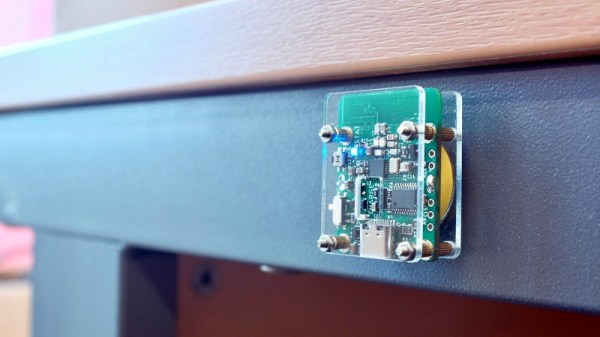
But fear not, for [dekuNukem] has found the solution with Daytripper. This wireless laser tripwire communicates back to your computer using NRF24 (2.4 Ghz on the ISM band) and can be used to invisibly cordon off a door or hallway and fire a scripted action on your computer if its beam has been broken. Nominally this is used to send the keyboard command that hides all open windows, but we’re sure the imaginative readers of Hackaday could come up with all sorts of alternate uses for this capability.

The Daytripper transmitter uses a laser time-of-flight sensor, in this case the very small VL53L0X by STMicroelectronics. It’s best situated so the laser will be bounced straight back at it. It has a range of about four feet, which is perfect for covering a door, though a wide hallway could give it some trouble. [dekuNukem] admits that the 5 Hz scan rate means a sufficiently fast moving adversary might slip past the sensor, but if they’re trying that hard to see what’s on your monitor, they probably deserve a peek.

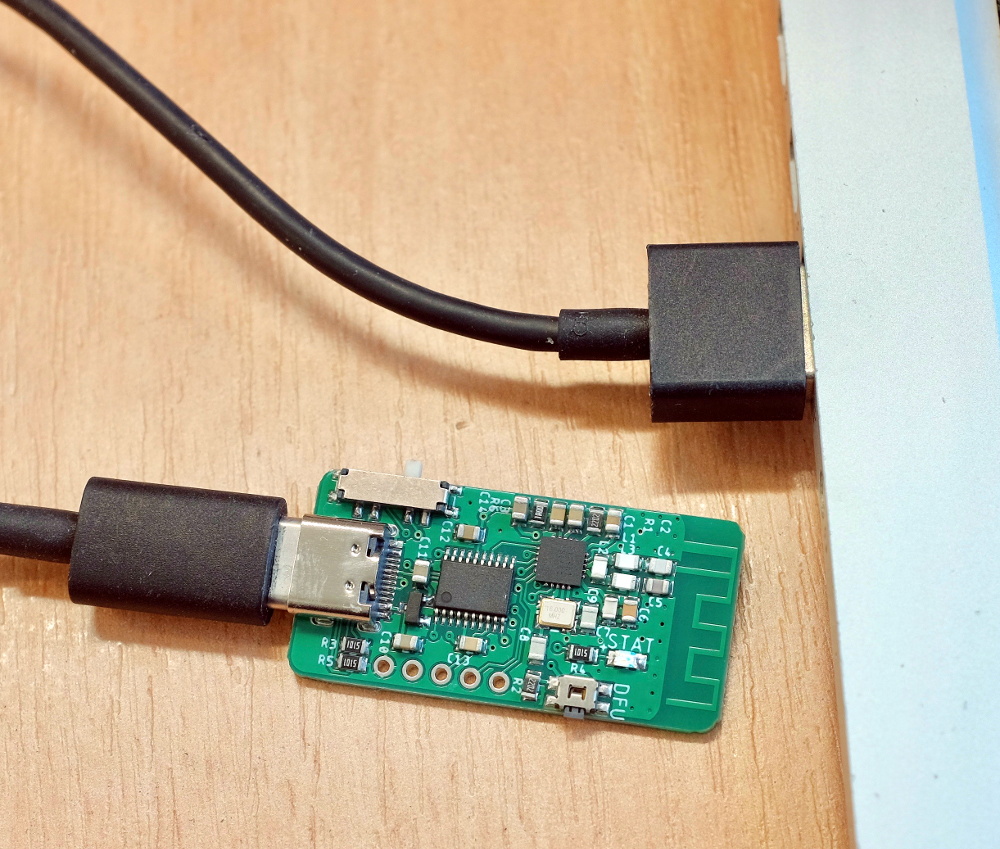
On the receiver side, there’s a small board that plugs into your computer and mimics a USB keyboard. It has a selector switch on the side that allows the user to set what key sequence will be “typed” once the system has been tripped. It has built-in support for minimizing all windows or locking the computer, or you can set it to send ALT + Pause, which you can listen for and act on however you see fit.

If you want to build your own Daytripper, the firmware and hardware are both available on GitHub under an MIT license. For those who prefer instant gratification, [dekuNukem] is doing a small production run and offering them up on Tindie.