Hackaday Report: Will 2022 Bring A New Dawn For The Chip Shortage?

As the world begins to slowly pull itself out of the economic effects of the pandemic, there’s one story that has been on our minds for the past couple of years, and it’s probably on yours too. The chip shortage born during those first months of the pandemic has remained with us despite the best efforts of the industry. Last year, pundits were predicting a return to normality in 2022, but will unexpected threats to production such as the war in Ukraine keep us chasing supplies? It’s time to delve into the root of the issue and get to the bottom of it for a Hackaday report.

The Chips Are Down
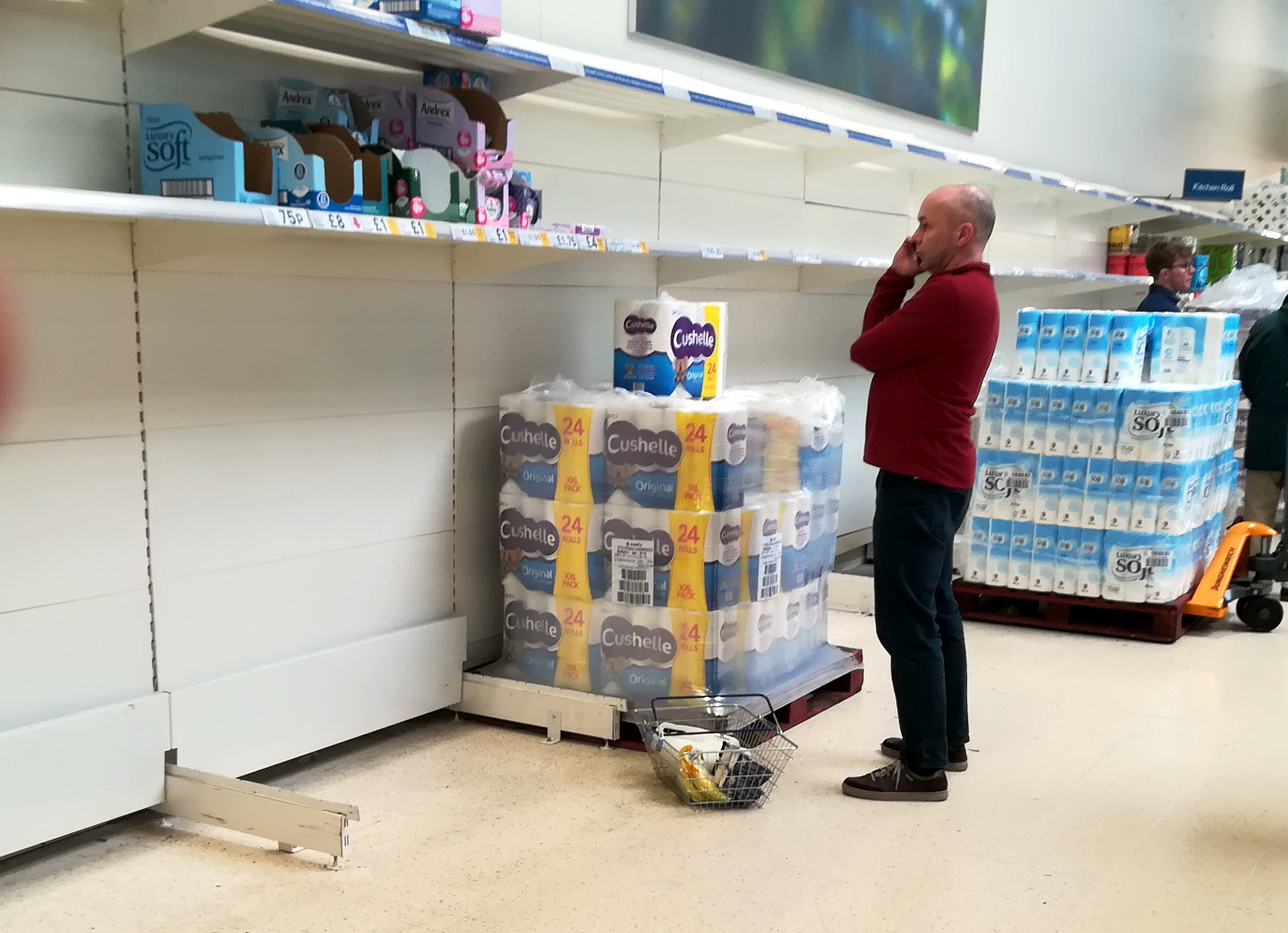
Empty supermarket shelves in March 2020
Consumers were more interested in toilet paper than chip supply during the lockdown.

Going back to 2020, and as global economies abruptly slowed down in the face of stringent lockdowns it’s clear that both chipmakers and their customers hugely underestimated the effect that the pandemic would have on global demand for chips.

As production capacity was reduced or turned to other products in response to the changed conditions, it was soon obvious that the customers’ hunger for chips had not abated, resulting in a shortfall between supply and demand.

We’ve all experienced the chaos that ensued as the supply of popular varieties dried up almost overnight, and as fresh pandemic waves have broken around the world along with a crop of climate and geopolitical uncertainties it’s left many wondering whether the chip situation will ever be the same again.

Green Shoots In Idaho

An Idaho License plate: "Famous potatoes"
Idaho leads the way in a chip shortage recovery! inkknife_2000, CC BY-SA 2.0

Amidst all that gloom, there are some encouraging green shoots to be seen. While it’s perhaps not quite time to celebrate, there’s a possibility for some cautious optimism. This month brought the hope that Potato Semiconductor might be cutting the sod on a new production capacity for their ultra-fast digital logic in Idaho, and with other manufacturers following suit it could be that we’ll once again have all the chip capacity we can eat.

But the other side of the chip business coin lies with the customer: we all see the chip shortage from our own semi-insider perspective, but have the tastes of the general public returned towards chips? Early signs are that as consumer confidence returns there are encouraging trends in chip consumption taking root, so we’d be inclined to advise our readers to have cautious optimism. If all goes well, you’ll be having your chips by summer.

The prospects for a new dawn in chip production capacity in 2022 look rosy, but there’s a further snag on the horizon courtesy of the Russian invasion of Ukraine. Like so many industries in a globalised economy, the chip industry depends heavily on supplies, consumables, and machinery from beyond the borders of wherever the plants themselves may lie.

In the case of Ukraine there’s a particular raw material whose supply has been severely interrupted, and though we hope for a speedy resolution of the conflict and a consequent resumption of production, the knock-on effect on the production of chips in the rest of the world can not be underestimated. Despite the ramp-up in output led by Idaho, the production of chips globally still relies heavily on Ukrainian sunflower oil. There’s a possibility that an acceptable substitute might be found in canola oil, but it will remain to be seen whether the chip-eating consumers will notice the taste difference.

If you would like to help the people of Ukraine in their hour of need, here are some organisations working on the ground to whom you can donate.

Header image: Daniel Kraft, CC BY-SA 3.0.
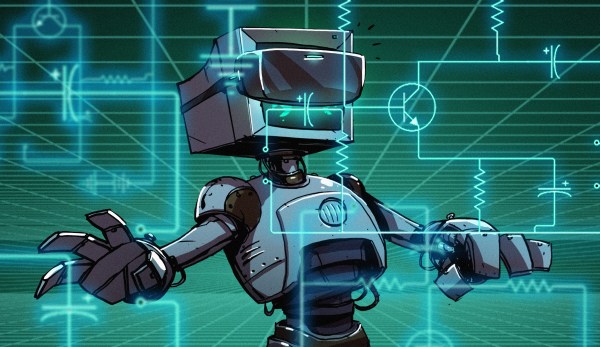
Circuit VR: The Wheatstone Bridge Analog Computer

We are always impressed with something so simple can actually be so complex. For example, what would you think goes into an analog computer? Of course, a “real” analog computer has opamps that can do logarithms, square roots, multiply, and divide. But would it surprise you that you can make an analog device like a slide rule using a Wheatstone bridge — essentially two voltage dividers. You don’t even need any active devices at all. It is an old idea and one that used to show up in electronic magazines now and again. I’ll show you how they work and simulate the device so you don’t have to build it unless you just want to.

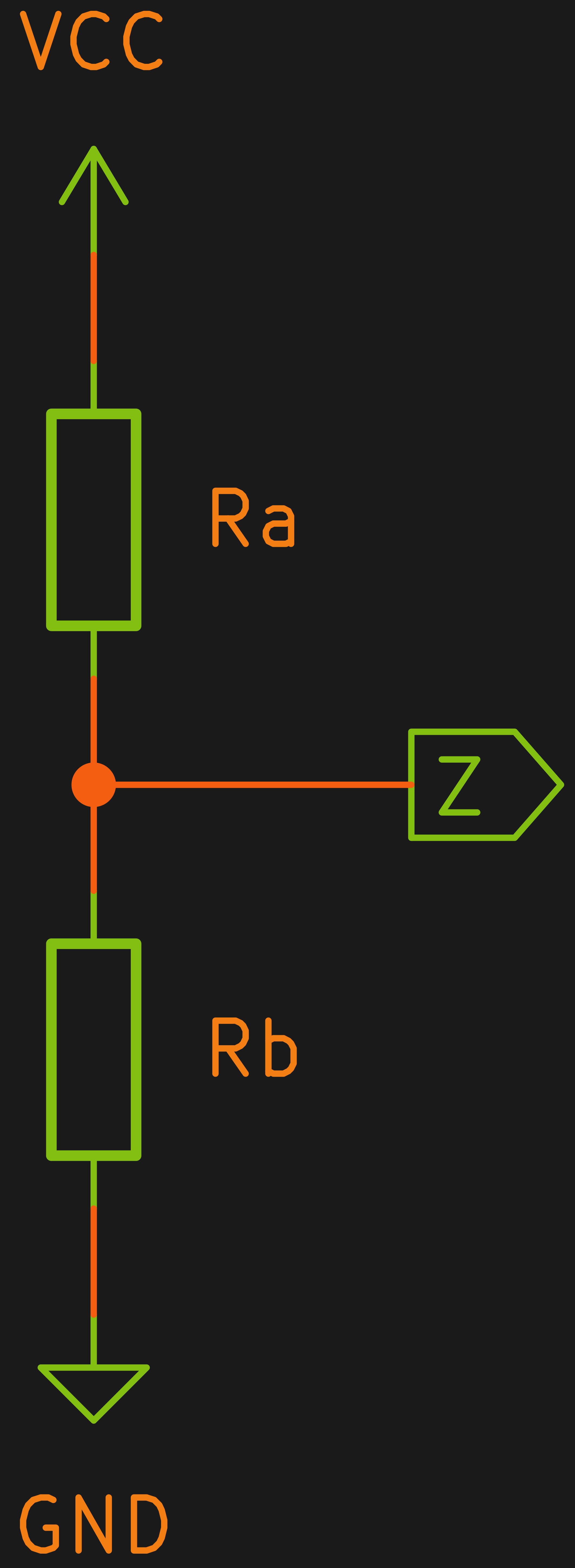
A voltage divider is one of the easiest circuits in the world to analyze. Consider two resistors Ra and Rb in series. Voltage comes in at the top of Ra and the bottom of Rb is grounded. The node connecting Ra and Rb — let’s call it Z — is what we’ll consider the output.

Let’s say we have a 10 V battery feeding A and a perfect voltmeter that doesn’t load the circuit connected to Z. By Kirchoff’s current law we know the current through Ra and Rb must be the same. After all, there’s nowhere else for it to go. We also know the voltage drop across Ra plus the voltage drop across Rb must equal to 10 V. Kirchoff, conservation of energy, whatever you want to call it.  Let’s call these quantities I, Va, and Vb. Continue reading “Circuit VR: The Wheatstone Bridge Analog Computer” →

Replaceable Batteries Are Coming Back To Phones If The EU Gets Its Way

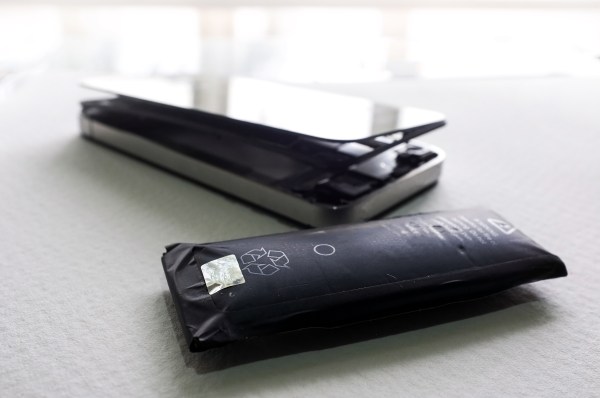
Back in the day, just about everything that used a battery had a hatch or a hutch that you could open to pull it out and replace it if need be. Whether it was a radio, a cordless phone, or a cellphone, it was a cinch to swap out a battery.

These days, many devices hide their batteries, deep beneath tamper-proof stickers and warnings that state there are “no user serviceable components inside.” The EU wants to change all that, though, and has voted to mandate that everything from cellphones to e-bikes must have easily replaceable batteries, with the legislation coming into effect as soon as 2024.

Continue reading “Replaceable Batteries Are Coming Back To Phones If The EU Gets Its Way” →

Is The IPhone Camera Too Smart? Or Not Smart Enough?

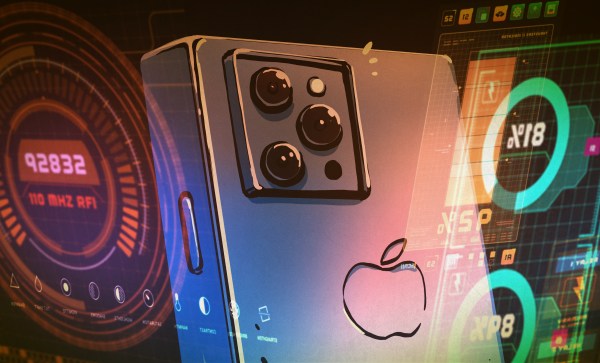
What is a photograph? Technically and literally speaking, it’s a drawing (graph) of light (photo). Sentimentally speaking, it’s a moment in time, captured for all eternity, or until the medium itself rots away. Originally, these light-drawings were recorded on film that had to be developed with a chemical process, but are nowadays often captured by a digital image sensor and available for instant admiration. Anyone can take a photograph, but producing a good one requires some skill — knowing how to use the light and the camera in concert to capture an image.

Eye-Dynamic Range

The point of a camera is to preserve what the human eye sees in a single moment in space-time. This is difficult because eyes have what is described as high dynamic range. Our eyes can process many exposure levels in real time, which is why we can look at a bright sky and pick out details in the white fluffy clouds. But a camera lens can only deal with one exposure level at a time.

In the past, photographers would create high dynamic range images by taking multiple exposures of the same scene and stitching them together.Done just right, each element in the image looks as does in your mind’s eye. Done wrong, it robs the image of contrast and you end up with a murky surreal soup.

Image via KubxLab

Continue reading “Is The IPhone Camera Too Smart? Or Not Smart Enough?” →

NASA Continues Slow And Steady Pace Towards Moon

It’s often said that the wheels of government turn slowly, and perhaps nowhere is this on better display than at NASA. While it seems like every week we hear about another commercial space launch or venture, projects helmed by the national space agency are often mired by budget cuts and indecisiveness from above. It takes a lot of political will to earmark tens or even hundreds of billions of dollars on a project that could take decades to complete, and not every occupant of the White House has been willing to stake their reputation on such bold ambitions.

In 2019, when Vice President Mike Pence told a cheering crowd at the U.S. Space & Rocket Center that the White House was officially tasking NASA with returning American astronauts to the surface of the Moon by 2024, everyone knew it was an ambitious timeline. But not one without precedent. The speech was a not-so-subtle allusion to President Kennedy’s famous 1962 declaration at Rice University that America would safely land a man on the Moon before the end of the decade, a challenge NASA was able to meet with fewer than six months to spare.

Unfortunately, a rousing speech will only get you so far. Without a significant boost to the agency’s budget, progress on the new Artemis lunar program was limited. To further complicate matters, less than a year after Pence took the stage in Huntsville, there was a new President in the White House. While there was initially some concern that the Biden administration would axe the Artemis program as part of a general “house cleaning”, it was allowed to continue under newly installed NASA Administrator Bill Nelson. The original 2024 deadline, at this point all but unattainable due to delays stemming from the COVID-19 pandemic, has quietly been abandoned.

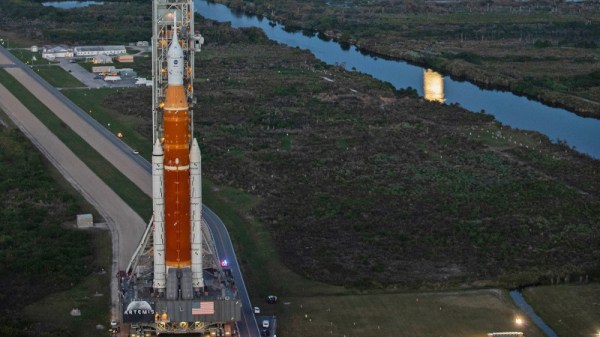
So where are we now? Is NASA in 2022 any closer to returning humanity to the Moon than they were in 2020 or even 2010? While it might not seem like it from an outsider’s perspective, a close look at some of the recent Artemis program milestones and developments show that the agency is at least moving in the right direction.

Continue reading “NASA Continues Slow And Steady Pace Towards Moon” →

High Noon For Daylight Savings Time

The US Senate has approved the “Sunshine Protection Act”, a bill to make Daylight Saving time the default time and do away with the annual time changes. While I can get behind the latter half of this motion, redefining Daylight Saving time as Standard time is, in my opinion, nonsense.

It’s particularly funny timing, coming right around the Vernal Equinox, when the sun stands at its highest right at Noon Standard Time, to be debating calling this time “one PM” forevermore.

Right Idea, Wrong Time

Let’s do a quick overview of the good idea here — doing away with time changes. These are known to cause sleep disturbances and this leads not just to sleepy heads on Monday morning, but to an increased risk of heart attack and accidents in general. When researchers look into the data, it’s the “springing forward” that causes trouble. People who’ve slept one extra hour don’t seem to suffer as much as people who’ve lost one. Go figure.

So maybe it makes sense to stop changing times. If we’re going to settle on one standard time, do we pick Standard time or Daylight Saving time? Admittedly, this is a totally unfair way to pose the question, but there are a number of good reasons to prefer all-year Standard time. The biggest one is winter. Basically, it’s already tough enough to get up on a cold January morning when the sun is not due to rise for another hour or two. Add another hour of darkness on top, and you know why the two previous attempts to run all-year Daylight Saving were short-lived. And why the Swedes drink so much coffee.

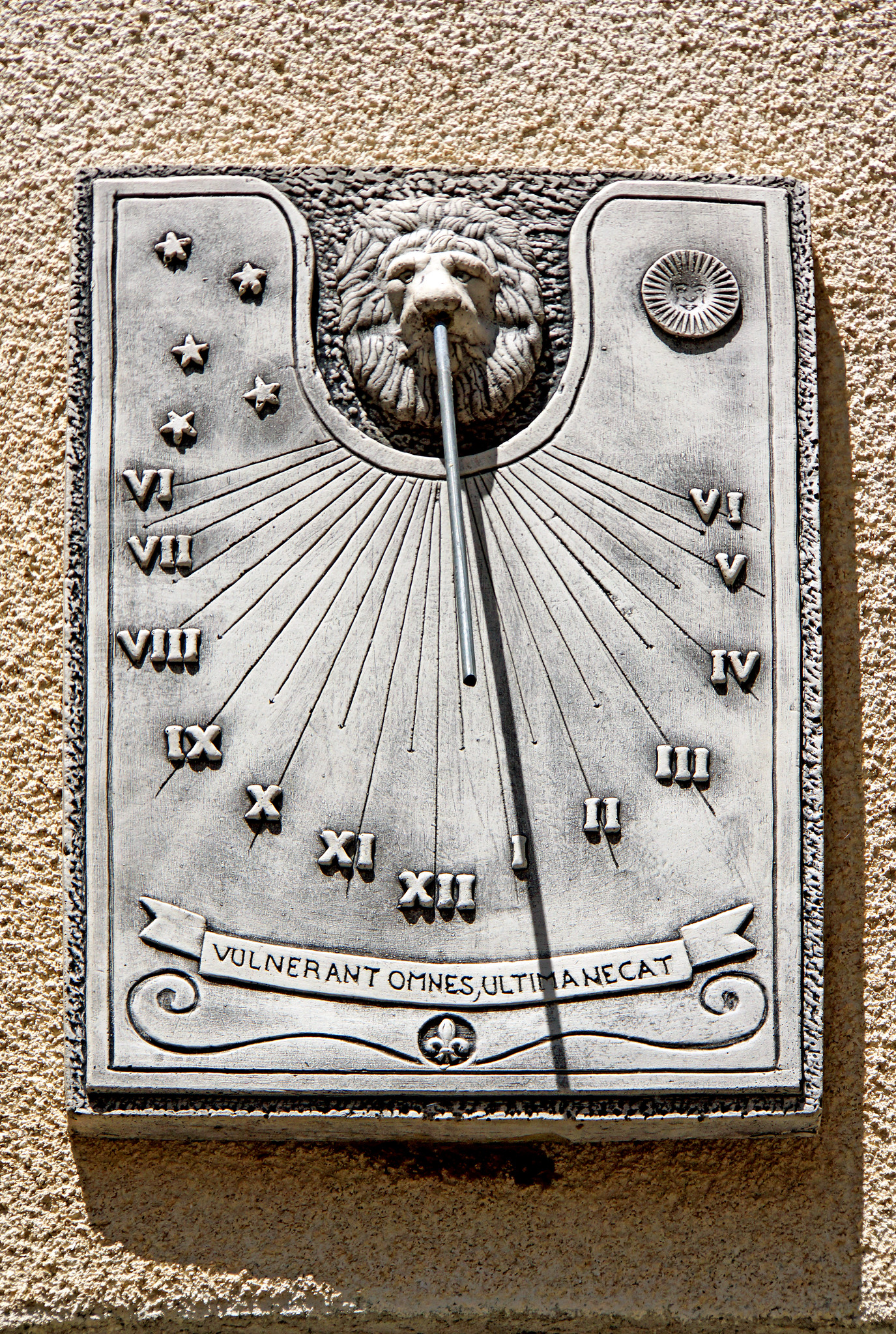
“France-002886 – Sundial” by archer10 (Dennis) CC BY-SA 2.0.

There’s also the fundamental logic behind our measurement of time that’s stood for centuries, and is embedded in most of our cultural references to time. Ante Meridian and Post Meridian. High Noon, when the hour hand on the clock points straight up, represents the sun itself. But even before clocks, the sun’s halfway point along its daily journey marked the halfway point of the day. That’s not only why we eat lunch when we do, it’s the origin of man’s time-telling itself.

If we change the definition of noon permanently, we’ve decoupled time from the sun. How will we explain time to future children? I’ll accept Daylight Saving time when we start reprinting analog watches with 1 o’clock at the top and start referring to 12 AM as the one that’s just before the sun reaches its peak. As soon as “one noon” replaces “twelve noon”, I’ll get on board. Midnight, when the clock strikes one, just doesn’t send the same shiver down my spine. Sorry, Dracula.

If culture and physics point to Standard Time, why would you want Daylight Saving to be the new normal? When people think of Daylight Saving, they naturally think of those nice long summer days that stretch out into the night. My personal bet is that many folks are confounding summertime with Summer Time. Heck, even the name of the bill proposes to protect sunshine itself, rather than just move the hands of the clock around. These are not good reasons.

Continue reading “High Noon For Daylight Savings Time” →

Tech In Plain Sight: Car Doors

There are a lot of common phrases that no longer mean what they used to. For example, you may have used the term “turn on the lights.” What are you actually turning? Where does this come from? Old gas lights had a valve that you did physically turn, and the phrase simply stuck around. Kids of the 90s have no idea why they “dial” a phone number. What about “roll up the car window”?  You don’t often encounter old-fashioned car doors with manual locks or a crank to roll up the window. These days it is all electronic. But have you ever wondered what’s going on inside there?

Let’s take a look at car doors, how they keep you safe, and how that sheet of glass slides into place, sealing against wind, rain, and noise. Of course, there are fancy car doors like suicide doors or sexy-but-impractical gull wing doors. At least one concept car even has a door that disappears under the vehicle when it opens; check out the video below. But even garden-variety doors are marvels of mechanical engineering. A compact structure that is secure and — mostly — reliable. Let’s look at how they do that.

Continue reading “Tech In Plain Sight: Car Doors” →