
Low Tech High Safety And The NYC Subway System

The year is 1894. You are designing a train system for a large city. Your boss informs you that the mayor’s office wants assurances that trains can’t have wrecks. The system will start small, but it is going to get big and complex over time with tracks crossing and switching. Remember, it is 1894, so computing and wireless tech are barely science fiction at this point. The answer — at least for the New York City subway system — is a clever system of signals and interlocks that make great use of the technology of the day. Bernard S. Greenberg does a great job of describing the system in great detail.

The subway began operation in 1904, well over 30 years since the above-ground trains began running. A clever system of signals and the tracks themselves worked together with some mechanical devices to make the subway very safe. Even if you tried to run two trains together, the safety systems would prevent it.

On the face of it, the system is very simple. There are lights that show red, yellow, and green. If you drive, you know what these mean. But what’s really interesting is the scheme used at the time to make them light.

Continue reading “Low Tech High Safety And The NYC Subway System”

Three Dimensions: What Does That Really Mean?

The holy grail of display technology is to replicate what you see in the real world. This means video playback in 3D — but when it comes to displays, what is 3D anyway?

You don’t need me to tell you how far away we are from succeeding in replicating real life in a video display. Despite all the hype, there are only a couple of different approaches to faking those three-dimensions. Let’s take a look at what they are, and why they can call it 3D, but they’re not fooling us into believing we’re seeing real life… yet.

Continue reading “Three Dimensions: What Does That Really Mean?”

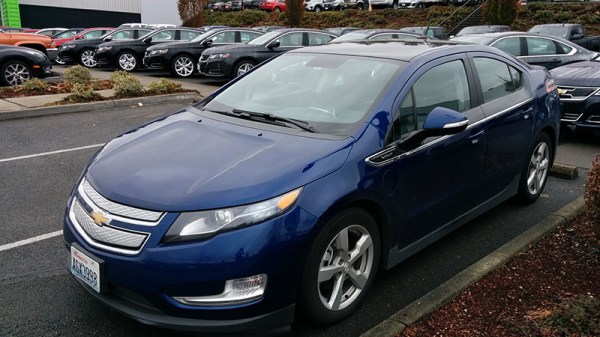
Goodbye Chevy Volt, The Perfect Car For A Future That Never Was

A month ago General Motors announced plans to wind down production of several under-performers. At the forefront of news coverage on this are the consequences facing factories making those cars, and the people who work there. The human factor associated with the closing of these plants is real. But there is also another milestone marked by the cancellation of the Volt. Here at Hackaday, we choose to memorialize the soon-to-be-departed Chevrolet Volt. An obituary buried in corporate euphemisms is a whimper of an end for what was once their technological flagship car of the future.

Continue reading “Goodbye Chevy Volt, The Perfect Car For A Future That Never Was”

The Age Of Hypersonic Weapons Has Begun

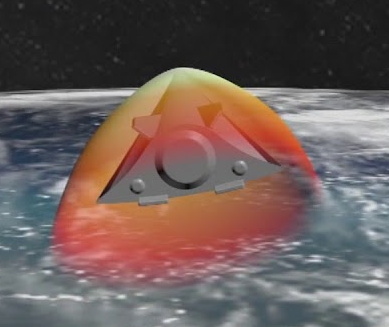
With a highly publicized test firing and pledge by President Vladimir Putin that it will soon be deployed to frontline units, Russia’s Avangard hypersonic weapon has officially gone from a secretive development program to an inevitability. The first weapon of its type to enter into active service, it’s capable of delivering a payload to any spot on the planet at speeds up to Mach 27 while remaining effectively unstoppable by conventional missile defense systems because of its incredible speed and enhanced maneuverability compared to traditional intercontinental ballistic missiles (ICBMs).

Rendering of Avangard reentering Earth’s atmosphere

In a statement made after the successful test of Avangard, which saw it hit a target approximately 6,000 kilometers (3,700 miles) from the launch site, President Putin made it clear that the evasive nature of the weapon was not to be underestimated: “The Avangard is invulnerable to intercept by any existing and prospective missile defense means of the potential adversary.” The former Soviet KGB agent turned head of state has never been one to shy away from boastful claims, but in this case it’s not just an exaggeration. While the United States and China have been working on their own hypersonic weapons which should be able to meet the capabilities of Avangard when they eventually come online, there’s still no clear deterrent for this type of weapon.

Earlier in the year, commander of U.S. Strategic Command General John Hyten testified to the Senate Armed Services Committee that the threat of retaliation was the best and perhaps only method of keeping the risk of hypersonic weapons in check: “We don’t have any defense that could deny the employment of such a weapon against us, so our response would be our deterrent force.” Essentially, the threat of hypersonic weapons may usher in a new era of “mutually assured destruction” (MAD), the Cold War era doctrine that kept either side from firing the first shot knowing they would sustain the same or greater damage from their adversary.

With President Putin claiming Avangard has already entered into serial production and will be deployed as soon as early 2019, the race is on for the United States and China to close the hypersonic gap. But exactly how far away is the rest of the world from developing an operational hypersonic weapon? Perhaps more to the point, what does “hypersonic weapon” really mean?

Continue reading “The Age Of Hypersonic Weapons Has Begun”

Finding The Goldilocks Cell Module

If adding a cell modem is dealing with a drama queen of a hardware component, then choosing from among the many types of modules available turns the designer into an electronics Goldilocks. There are endless options for packaging and features all designed to make your life easier (or not!) so you-the-designer needs to have a clear understanding of the forces at work to come to a reasonable decision. How else will Widget D’lux® finally ship? You are still working on Widget D’lux®, aren’t you?

OK, quick recap from last time. Cell modems can be used to add that great feature known as The Internet to your product, which is a necessary part of the Internet of Things, and thus Good. So you’re adding a cell modem! But “adding a cell modem” can mean almost anything. Are you aiming to be Qualcomm and sue Apple build modems from scratch? Probably not. What about sticking a Particle Electron inside to bolt something together quickly? Or talk to Telit and put a bare modem on a board? Unless you’re expecting to need extremely high volume and have a healthy appetite for certification glee, I bet you’ve chosen to get a modem with as many existing certifications as possible, which takes us to where we are today. Go read the previous post if you want a much more elaborate discussion of your modem-packaging options and some of the trade offs involved. Continue reading “Finding The Goldilocks Cell Module”

Why Converting Classic Cars To Electric Drive Is A Thing

A vintage British sportscar is a wonderful thing. Inimitable style and luxury, beautiful curves, and a soundtrack that could make even Vinnie Jones shed a tear. However, even under the most diligent maintenance schedule, they are known, above all, for their unreliability. As the value of such cars is tied heavily to their condition as unmodified examples, owners are typically reluctant to make modifications to remedy these issues.

However, things are starting to change. Cities across the world are enacting measures to ban fossil fuel vehicles from their streets, and sales of such vehicles are similarly going to be banned entirely. The automotive industry is preparing for a major pivot towards electric drivetrains, and no carmaker will be left untouched. In this landscape, it’s not just Tesla and Nissan who are selling electric cars anymore. Luxury brands are beginning to deliver electric vehicles, too.

Continue reading “Why Converting Classic Cars To Electric Drive Is A Thing”

Your Face Is Going Places You May Not Like

Many Chinese cities, among them Ningbo, are investing heavily in AI and facial recognition technology. Uses range from border control — at Shanghai’s international airport and the border crossing with Macau — to the trivial: shaming jaywalkers.

In Ningbo, cameras oversee the intersections, and use facial-recognition to shame offenders by putting their faces up on large displays for all to see, and presumably mutter “tsk-tsk”. So it shocked Dong Mingzhu, the chairwoman of China’s largest air conditioner firm, to see her own face on the wall of shame when she’d done nothing wrong. The AIs had picked up her face off of an ad on a passing bus.

False positives in detecting jaywalkers are mostly harmless and maybe even amusing, for now. But the city of Shenzhen has a deal in the works with cellphone service providers to identify the offenders personally and send them a text message, and eventually a fine, directly to their cell phone. One can imagine this getting Orwellian pretty fast.

Facial recognition has been explored for decades, and it is now reaching a tipping point where the impacts of the technology are starting to have real consequences for people, and not just in the ways dystopian sci-fi has portrayed. Whether it’s racist, inaccurate, or easily spoofed, getting computers to pick out faces correctly has been fraught with problems from the beginning. With more and more companies and governments using it, and having increasing impact on the public, the stakes are getting higher.

Continue reading “Your Face Is Going Places You May Not Like”