Color-Coded Key Opens Doors, Opportunities

Of all the ways to open up a lock, there are some tried and true methods. Keys, combinations, RFIDs, picks, and explosives have all had their time and place, but now someone else wants to try something new. [Erik] has come up with a lock that opens when it is shown a pattern of colors.

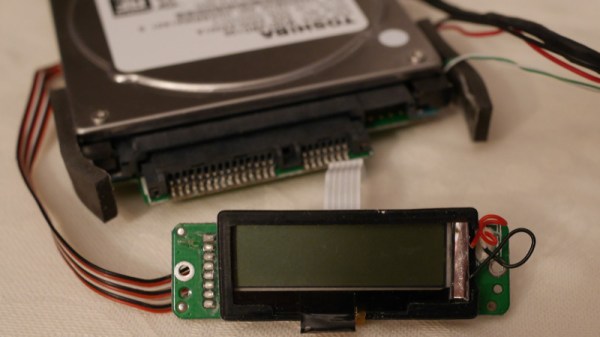
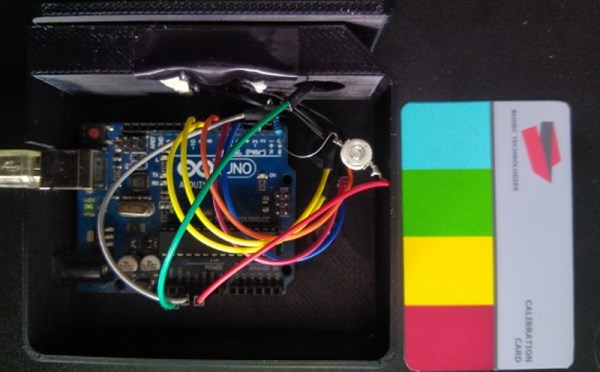
The lock in question uses a set of color coded cards as the “keys”. When the cards are inserted in the lock, a TCS230 color sensor interprets the pattern on the cards and sends the information over to an Arduino Uno. From there, the Arduino can command the physical lock to open if the pattern is a match, although [Erik] is still waiting on the locking mechanism to arrive while he continues to prototype the device.

This is a fairly unique idea with a number of upsides. First, the code can’t be “stolen” from inside a wallet like RFID cards can. (Although if you can take a picture of the card all bets are off.) If you lose your key, you can simply print another one, and the device is able to handle multiple different keys and log the usage of each one. Additionally, no specialized equipment is needed to create the cards, unlike technologies that rely on magnetic strips. Of course, there’s always this classic way of opening doors if you’d rather go old school with your home locks.

Continue reading “Color-Coded Key Opens Doors, Opportunities”

Memcached Servers Abused For DDoS Attacks

Cloudflare announced recently that they are seeing an increase in amplification attacks using memcached servers, and that this exploit has the potential to be a big problem because memcached is capable of amplifying an attack significantly. This takes DDoS attacks to a new level, but the good news is that the problem is confined to a few thousand misconfigured servers, and the solution is to put the servers behind a tighter firewall and to disable UDP. What’s interesting is how the fundamental workings of the Internet are exploited to create and direct a massive amount of traffic.

We start with a botnet. This is when a bunch of Internet-connected devices are compromised and controlled by a malicious user. This could be a set of specific brand of web camera or printer or computer with unsecured firmware. Once the device is compromised, the malicious user can control the botnet and have it execute code. This code could mine cryptocurrency, upload sensitive data, or create a lot of web traffic directed at a particular server, flooding it with requests and creating a distributed denial of service (DDoS) attack that takes down the server. Since the server can’t distinguish regular traffic from malicious traffic, it can’t filter it out and becomes unresponsive.

This DDoS attack is limited to the size of the botnet’s bandwidth, though. If all the web cameras in the botnet are pounding a server as fast as they can, the botnet has reached its max. The next trick is called an amplification attack, and it exploits UDP. UDP (as opposed to TCP) is like the early post office; you send mail and hope it gets there, and if it doesn’t then oh well. There’s no handshaking between communicating computers. When a device sends a UDP packet to a server, it includes the return address so that the server can send the response back. If the device sends a carefully crafted fake request with a different return address, then the server will send the response to that spoofed return address.

So if the web camera sends a request to Server A and the response is sent to Server B, then Server A is unintentionally attacking Server B. If the request is the same size as the response, then there’s no benefit to this attack. If the request is smaller than the response, and Server A sends Server B a bunch of unrequested data for every request from the camera, then you have a successful amplification attack. In the case of memcached, traffic can be amplified by more than 50,000 times, meaning that a small botnet can have a huge effect.

Memcached is a memory caching system whose primary use is to help large websites by caching data that would otherwise be stored in a database or API, so it really shouldn’t be publicly accessible anyway.  And the solution is to turn off public-facing memcached over UDP, but the larger solution is to think about what things you are making available to the Internet, and how they can be used maliciously.


France Proposes Software Security Liability For Manufacturers, Open Source As Support Ends

It sometimes seems as though barely a week can go by without yet another major software-related hardware vulnerability story. As manufacturers grapple with the demands of no longer building simple appliances but instead supplying them containing software that may expose itself to the world over the Internet, we see devices shipped with insecure firmware and little care for its support or updating after the sale.

The French government have a proposal to address this problem that may be of interest to our community, to make manufacturers liable for the security of a product while it is on the market, and with the possibility of requiring its software to be made open-source at end-of-life. In the first instance it can only be a good thing for device security to be put at the top of a manufacturer’s agenda, and in the second the ready availability of source code would present reverse engineers with a bonanza.

It’s worth making the point that this is a strategy document, what it contains are only proposals and not laws. As a 166 page French-language PDF it’s a long read for any Francophones among you and contains many other aspects of the French take on cybersecurity. But it’s important, because it shows the likely direction that France intends to take on this issue within the EU. At an EU level this could then represent a globally significant move that would affect products sold far and wide.

What do we expect to happen in reality though? It would be nice to think that security holes in consumer devices would be neutralised overnight and then we’d have source code for a load of devices, but we’d reluctantly have to say we’ll believe it when we see it. It is more likely that manufacturers will fight it tooth and nail, and given some recent stories about devices being bricked by software updates at the end of support we could even see many of them willingly consigning their products to the e-waste bins rather than complying. We’d love to be proven wrong, but perhaps we’re too used to such stories. Either way this will be an interesting story to watch, and we’ll keep you posted.

Merci beaucoup [Sebastien] for the invaluable French-language help.

French flag: Wox-globe-trotter [Public domain].

Cell Phone Surveillance Car

There are many viable options for home security systems, but where is the fun in watching a static camera feed from inside your place? The freedom to really look around might have been what compelled [Varun Kumar] to build a security car robot to drive around his place and make sure all is in order.

Aimed at cost-effectiveness and WiFi or internet accessibility, an Android smartphone provides the foundation of this build — skipping the need for a separate Bluetooth or WiFi module — and backed up by an Arduino Uno, an L298 motor controller, and two geared DC motors powering the wheels.

Further taking advantage of the phone’s functionality, the robot is controlled by DTMF tones. Using the app DTMF Tone Generator and outputting through the 3.5mm jack, commands are interpreted by a MT8870DE DTMF decoder module.While this control method carries some risks — as with many IoT-like devices — [Kumar] has circumvented one of DTMF’s vulnerabilities by adding a PIN before the security car will accept any commands.

He obtains a live video feed from the phone using AirDroid in concert with VNC server, and assisted by a servo motor for the phone is enabled to sweep left and right for a better look. A VNC client on [Kumar]’s laptop is able to access the video feed and issue commands. Check it out in action after the break!

Continue reading “Cell Phone Surveillance Car”

Seek And Exploit Security Vulnerabilities In An Infusion Pump

Infusion pumps and other medical devices are not your typical everyday, off-the-shelf embedded system. Best case scenario, you will rarely, if ever, come across one in your life. So for wide-spread exploitation, chances are that they simply seem too exotic for anyone to bother exploring their weaknesses. Yet their impact on a person’s well-being makes potential security holes tremendously more severe in case someone decides to bother one day after all.

[Scott Gayou] is one of those someones, and he didn’t shy away from spending hundreds of hours of his free time inspecting the Smiths Medical Medfusion 4000 infusion pump for any possible security vulnerabilities. Looking at different angles for his threat model, he started with the physical handling of the device’s user interface. This allowed him to enable the external communication protocols settings, which in turn opened to the device’s FTP and Telnet ports. Not to give too much away, but he manages to gain access to both the file system content and — as a result of that — to the system’s login credentials. This alone can be clearly considered a success, but for [Scott], it merely opened a door that eventually resulted in desoldering the memory chips to reverse engineer the bootloader and firmware, and ultimately executing his own code on the device.

Understanding the implications of his discoveries, [Scott] waited long enough to publish his research so the manufacturer could address and handle these security issues. So kudos to him for fighting the good fight. And just in case the thought of someone gaining control over a machine that is crucial to your vitality doesn’t scare you enough yet, go ahead and imagine that device was actually implanted in your body.

Joykill: Previously Undisclosed Vulnerability Endangers User Data

Researchers have recently announced a vulnerability in PC hardware enabling attackers to wipe the disk of a victim’s computer. This vulnerability, going by the name Joykill, stems from the lack of proper validation when enabling manufacturing system tests.

Joykill affects the IBM PCjr and allows local and remote attackers to destroy the contents of the floppy diskette using minimal interaction. The attack is performed by plugging two joysticks into the PCjr, booting the computer, entering the PCjr’s diagnostic mode, and immediately pressing button ‘B’ on joystick one, and buttons ‘A’ and ‘B’ on joystick two. This will enable the manufacturing system test mode, where all internal tests are performed without user interaction. The first of these tests is the diskette test, which destroys all user data on any inserted diskette. There is no visual indication of what is happening, and the data is destroyed when the test is run.

A local exploit destroying user data is scary enough, but after much work, the researchers behind Joykill have also managed to craft a remote exploit based on Joykill. To accomplish this, the researchers built two IBM PCjr joysticks with 50-meter long cables.

Researchers believe this exploit is due to undocumented code in the PCjr’s ROM. This code contains diagnostics code for manufacturing burn-in, system test code, and service test code. This code is not meant to be run by the end user, but is still exploitable by an attacker. Researchers have disassembled this code and made their work available to anyone.

As of the time of this writing, we were not able to contact anyone at the IBM PCjr Information Center for comment. We did, however, receive an exciting offer for a Carribean cruise.

Apple Passwords: They All ‘Just Work’

When the Macintosh was released some thirty-odd years ago, to Steve Jobs’ triumphant return in the late 90s, there was one phrase to describe the simplicity of using a Mac. ‘It Just Works’. Whether this was a reference to the complete lack of games on the Mac (Marathon shoutout, tho) or a statement to the user-friendliness of the Mac, one thing is now apparent. Apple has improved the macOS to such a degree that all passwords just work. That is to say, security on the latest versions of macOS is abysmal, and every few weeks a new bug is reported.

The first such security vulnerability in macOS High Sierra was reported by [Lemi Ergin] on Twitter. Simply, anyone could login as root with an empty password after clicking the login button several times. The steps to reproduce were as simple as opening System Preferences, Clicking the lock to make changes, typing ‘root’ in the username field, and clicking the Unlock button. It should go without saying this is incredibly insecure, and although this is only a local exploit, it’s a mind-numbingly idiotic exploit. This issue was quickly fixed by Apple in the Security Update 2017-001

The most recent password flaw comes in the form of unlocking the App Store preferences that can be unlocked with any password. The steps to reproduce on macOS High Sierra are simply:

  • Click on System Preferences
  • Click on App Store
  • Click the padlock icon
  • Enter your username and any password
  • Click unlock

This issue has been fixed in the beta of macOS 10.13.3, which should be released within a month. The bug does not exist in macOS Sierra version 10.12.6 or earlier.

This is the second bug in macOS in as many months where passwords just work. Or don’t work, depending on how cheeky you want to be. While these bugs have been overshadowed with recent exploits of Intel’s ME and a million blog posts on Meltdown, these are very, very serious bugs that shouldn’t have happened in the first place. And, where there are two, there’s probably more.

We don’t know what’s up with the latest version of the macOS and the password problems, but we are eagerly awaiting the Medium post from a member of the macOS team going over these issues. We hope to see that in a decade or two.