Learning Morse Code The Ludwig Koch Way

Most countries have dropped the requirement for learning Morse code to become a ham radio operator. Because of that, you might think Morse code is dead. But it isn’t. Some people like the nostalgia. Some like that you can build simple equipment to send and receive Morse code. Others like that Morse code is much more reliable than voice and some older digital modes. Regardless of the reason, many people want to learn Morse code and it is still a part of the ham radio scene. The code has a reputation of being hard to learn, but it turns out that is mostly because people haven’t been taught code in smart ways.

I don’t know if they still do, but some youth organizations used to promote some particularly bad ways to learn the code. The second worse way is to learn “dots and dashes” and many people did learn that way. The very worst way was using an image like the adjacent one to try to map the dots and dashes into letter shapes. This chart dates back to at least 1918 when a Girl Guides handbook printed it.

Even if you are a visual learner, this is a bad idea. The problem is, it is nearly impossible to hear sounds at 20 or 30 words per minute and map them to this visual representation. Another visual method is to use a binary tree where left branches are dots and right branches are dashes.

If you only need to master 5 words per minute to get a merit badge, you might get away with this. But for real use, 5 words a minute is very slow. For example, this sentence would take about 3 minutes to send at that speed. Just that one sentence.

So what are the better ways? Let’s take a look.

Continue reading “Learning Morse Code The Ludwig Koch Way”

How Does Starlink Work Anyway?

No matter what you think of Elon Musk, it’s hard to deny that he takes the dictum “There’s no such thing as bad publicity” to heart. From hurling sports cars into orbit to solar-powered roof destroyers, there’s little that Mr. Musk can’t turn into a net positive for at least one of his many ventures, not to mention his image.

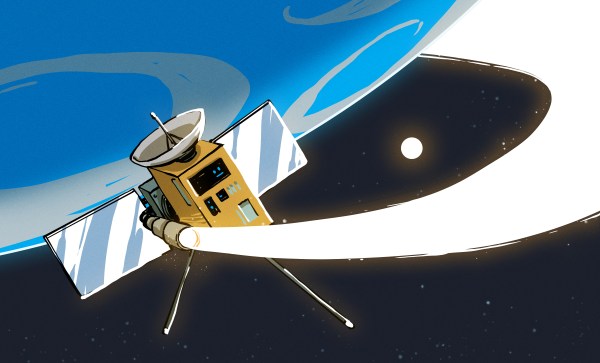
Elon may have gotten in over his head, though. His plan to use his SpaceX rockets to fill the sky with thousands of satellites dedicated to providing cheap Internet access ran afoul of the astronomy community, which has decried the impact of the Starlink satellites on observations, both in the optical wavelengths and further down the spectrum in the radio bands. And that’s with only a tiny fraction of the planned constellation deployed; once fully built-out, they fear Starlink will ruin Earth-based observation forever.

What exactly the final Starlink constellation will look like and what impact it would have on observations depend greatly on the degree to which it can withstand regulatory efforts and market forces. Assuming it does survive and gets built out into a system that more or less resembles the current plan, what exactly will Starlink do? And more importantly, how will it accomplish its stated goals?

Continue reading “How Does Starlink Work Anyway?”

MakerBot Targets Schools With Rebranded Printers

MakerBot was poised to be one of the greatest success stories of the open source hardware movement. Founded on the shared knowledge of the RepRap community, they created the first practical desktop 3D printer aimed at consumers over a decade ago. But today, after being bought out by Stratasys and abandoning their open source roots, the company is all but completely absent in the market they helped to create. Cheaper and better printers, some of which built on that same RepRap lineage, have completely taken over in the consumer space; forcing MakerBot to refocus their efforts on professional and educational customers.

This fundamental restructuring of the company is perhaps nowhere more evident than in the recent unveiling of “SKETCH Classroom”: an $1,800 package that includes lesson plans, a teacher certification program, several rolls of filament, and two of the company’s new SKETCH printers. It even includes access to MakerBot Cloud, a new online service that aims to help teachers juggle student’s print jobs between multiple SKETCH printers.

Of course, the biggest takeaway from this announcement for the average Hackaday reader is that MakerBot is releasing new hardware. Their last printer was clearly not designed (or priced) for makers, and even a current-generation Replicator costs more than the entire SKETCH Classroom package. On the surface, it might seem like this is a return to a more reasonable pricing model for MakeBot’s products; something that could even help them regain some of the market share they’ve lost over the years.

There’s only one problem, MakerBot didn’t actually make the SKETCH. This once industry-leading company has now come full-circle, and is using a rebranded printer as the keystone of their push into the educational market. Whether they were unable to build a printer cheap enough to appeal to schools or simply didn’t want to, the message is clear: if you can’t beat them, join them.

Continue reading “MakerBot Targets Schools With Rebranded Printers”

DNA Now Stands For Data And Knowledge Accumulation

Technology frequently looks at nature to make improvements in efficiency, and we may be nearing a new breakthrough in copying how nature stores data. Maybe some day your thumb drive will be your actual thumb. The entire works of Shakespeare could be stored in an infinite number of monkeys. DNA could become a data storage mechanism! With all the sensationalism surrounding this frontier, it seems like a dose of reality is in order.

The Potential for Greatness

The human genome, with 3 billion base pairs can store up to 750MB of data. In reality every cell has two sets of chromosomes, so nearly every human cell has 1.5GB of data shoved inside. You could pack 165 billion cells into the volume of a microSD card, which equates to 165 exobytes, and that’s if you keep all the overhead of the rest of the cell and not just the DNA. That’s without any kind of optimizing for data storage, too.

This kind of data density is far beyond our current digital storage capabilities. Storing nearly infinite data onto extremely small cells could change everything. Beyond the volume, there’s also the promise of longevity and replication, maintaining a permanent record that can’t get lost and is easily transferred (like medical records), and even an element of subterfuge or data transportation, as well as the ability to design self-replicating machines whose purpose is to disseminate information broadly.

So, where is the state of the art in DNA data storage? There’s plenty of promise, but does it actually work?

Continue reading “DNA Now Stands For Data And Knowledge Accumulation”

Mars 2020 Rover: Curiosity’s Hi-Tech Twin Is Strapped For Science; Includes A Flying Drone

While Mars may be significantly behind its sunward neighbor in terms of the number of motor vehicles crawling over its surface, it seems like we’re doing our best to close that gap. Over the last 23 years, humans have sent four successful rovers to the surface of the Red Planet, from the tiny Sojourner to the Volkswagen-sized Curiosity. These vehicles have all carved their six-wheeled tracks into the Martian dust, probing the soil and the atmosphere and taking pictures galore, all of which contribute mightily to our understanding of our (sometimes) nearest planetary neighbor.

You’d think then that sending still more rovers to Mars would yield diminishing returns, but it turns out there’s still plenty of science to do, especially if the dream of sending humans there to explore and perhaps live is to come true. And so the fleet of Martian rovers will be joined by two new vehicles over the next year or so, lead by the Mars 2020 program’s yet-to-be-named rover. Here’s a look at the next Martian buggy, and how it’s built for the job it’s intended to do.

Continue reading “Mars 2020 Rover: Curiosity’s Hi-Tech Twin Is Strapped For Science; Includes A Flying Drone”

Nuclear Fusion Power Without Regular Tokamaks Or Stellarators

When it comes to nuclear fusion, the most well-known reactor type today is no doubt the tokamak, due to its relatively straight-forward concept of plasma containment. That’s not to say that there aren’t other ways to accomplish nuclear fusion in a way that could conceivably be used in a commercial power plant in the near future.

As we covered previously, another fairly well-known type of fusion reactor is the stellarator, which much like the tokamak, has been around since the 1950s. There are other reactor types from that era, like the Z-pinch, but they seem to have all fallen into obscurity. That is not to say that research on Z-pinch reactors has ceased, or that other reactor concepts — some involving massive lasers — haven’t been investigated or even built since then.

In this article we’ll take a look at a range of nuclear fusion reactor types that definitely deserve a bit more time in the limelight.

Continue reading “Nuclear Fusion Power Without Regular Tokamaks Or Stellarators”

First Space Cookies: Cosmic Cooking Is Half-Baked

For decades, astronauts have been forced to endure space-friendly MREs and dehydrated foodstuffs, though we understand both the quality and the options have increased with time. But if we’re serious about long-term space travel, colonizing Mars, or actually having a restaurant at the end of the universe, the ability to bake and cook from raw ingredients will become necessary. This zero-gravity culinary adventure might as well start with a delicious experiment, and what better than chocolate chip cookies for the maiden voyage?

That little filtered vent lets steam out and keeps crumbs in. Image via Zero-G Kitchen

The vessel in question is the Zero-G Oven, built in a collaboration between Zero-G Kitchen and Nanoracks, a Texas-based company that provides commercial access to space. In November 2019, Nanoracks sent the Zero-G oven aloft, where it waited a few weeks for the bake-off to kick off. Five pre-formed cookie dough patties had arrived a few weeks earlier, each one sealed inside its own silicone baking pouch.

The Zero-G Oven is essentially a rack-mounted cylindrical toaster oven. It maxes out at 325 °F (163 °C), which is enough heat for Earth cookies if you can wait fifteen minutes or so. But due to factors we haven’t figured out yet, the ISS cookies took far longer to bake.

Continue reading “First Space Cookies: Cosmic Cooking Is Half-Baked”