Livestreaming Backpack Takes Streaming On-The-Go

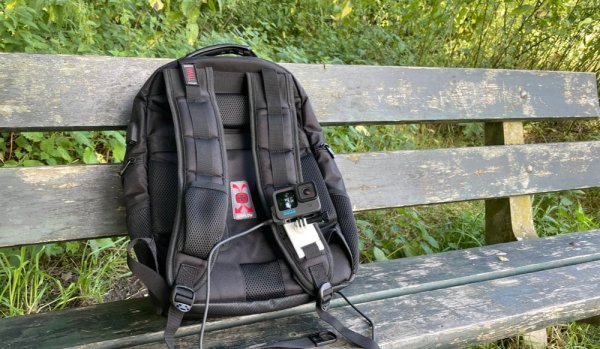
Anyone who’s anyone on the internet these days occasionally streams content online. Whether that’s the occasional livestream on YouTube or an every day video game session on Twitch, it’s definitely a trend that’s here to stay. If you want to take your streaming session on the go, though, you’ll need some specialized hardware like [Melissa] built into this livestreaming backpack.

[Melissa] isn’t actually much of a streamer but built this project just to see if it could be done. The backpack hosts a GoPro camera with a USB interface, mounted on one of the straps of the pack with some 3D printed parts, allowing it to act as a webcam. It is plugged into a Raspberry Pi which is set up inside the backpack, and includes a large heat sink to prevent it from overheating in its low-ventilation environment. There’s also a 4G modem included along with a USB battery pack to keep everything powered up.

The build doesn’t stop at compiling hardware inside a backpack, though. [Melissa] goes into detail on the project’s page about how to get all of the hardware to talk amongst themselves and where the livestream is setup as well. If you’d like a more permanently-located streaming setup with less expensive hardware, we have seen plenty of builds like this which will get the job done as well.
Reverse-Engineering A Smoker

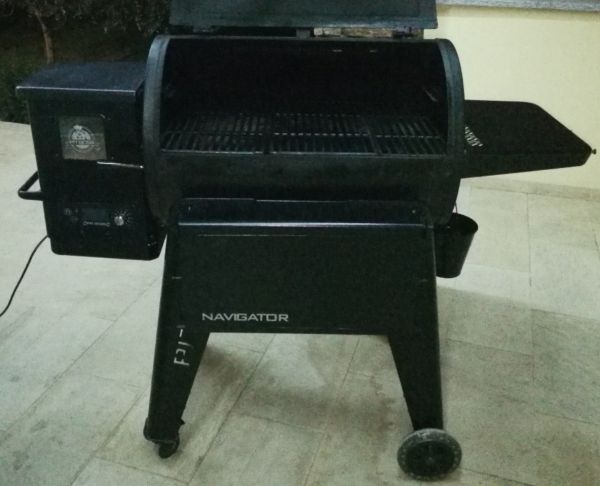
In certain parts of the world, cooking meat in a regionally-specific way is a critical part of the local culture. From barbeque in the American south to boerewors and braaivleis in South Africa to Montréal smoked meat in French Canada, almost every location has its cookout specialty. So much so that various manufacturers of the tools used for these foods include all kinds of gadgets to monitor the sometimes days-long process of cooking various cuts of meat. [megamarco833]’s smoker, though, includes some tools of his own design.

The smoker is made by a company called Pitboss and includes a rotary switch and control board for maintaining a precise temperature in the smoker. The switch works by changing the voltage value sent to a small microcontroller. By interfacing an ESP32 to this switch, [megamarco833] can remotely change the smoke level and temperature of the smoker. On the software side, it uses a combination of Node-RED and Domoticz to handle the automation and control.

For a cookout that can last hours (if not days) a remotely accessible smoker like this is an invaluable tool if you want to do something other than manually monitor the temperature of your meat for that much time. And, if your barbeque grill or smoker of choice doesn’t already have an embedded control board of some type, we’ve seen analog cooking tools adapted to much the same purpose as this one.

Thanks to [Peter] who sent in the tip and also helped [megamarco833] with the reverse-engineering of the control board!

Replace An AA Battery With Paper

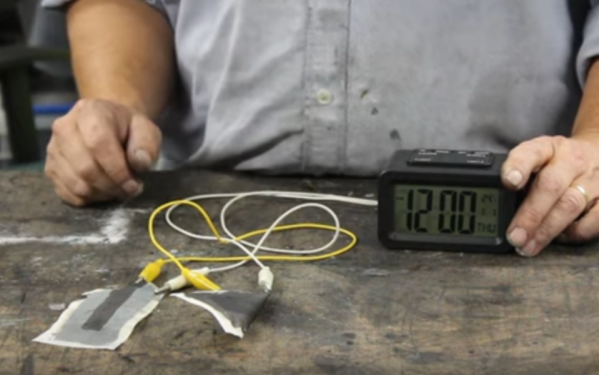
Paper is an ubiquitous part of society; so much so that the incredible engineering behind it often goes unnoticed. That isn’t the case for [Robert], though, who has a deep appreciation for the material and all its many uses far beyond recording information. In this particular video, he recreates a method found by researchers to turn a piece of paper into a battery with equivalent performance to a AA-sized alkaline battery. (Video, embedded below the break.)

The process involves the creation of a few different types of ink, each of which can be made with relatively common materials such as shellac, ethanol, polyethylene glycol, and graphite. Each of these materials are mixed in different proportions to create the inks. Once the cathode ink and anode ink are made, a third ink is needed called a current collector ink which functions essentially as a wire. The paper is dipped into a salt solution and then allowed to dry, given a partial waterproof coating, and when it is needed it can be activated by wetting it which allows the ion flow of the battery to happen.

The chemistry of this battery makes a lot of sense once you see it in action, and the battery production method also has a perk of having a long shelf life as long as the batteries stay dry. They also don’t damage the environment as much as non-rechargable alkaline cells do, at least unless you want to go to some extreme measures to reuse them.

Continue reading “Replace An AA Battery With Paper”

Scavenging CDs For Flexible Parts

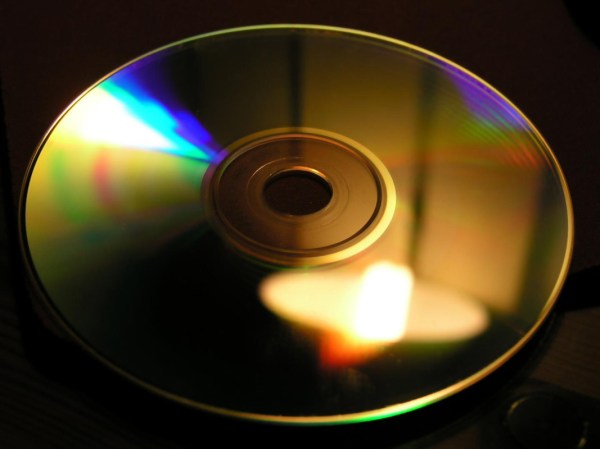
CDs are becoming largely obsolete now, thanks to the speed of the internet and the reliability and low costs of other storage media. To help keep all of this plastic out of the landfills, many have been attempting to find uses for these old discs. One of the more intriguing methods of reprurposing CDs was recently published in Nature, which details a process to harvest and produce flexible biosensors from them.

The process involves exposing the CD to acetone for 90 seconds to loosen the material, then transferring the reflective layer to a plastic tape. From there, various cutting tools can be used to create the correct pattern for the substrate of the biosensor. This has been shown to be a much more cost-effective method to produce this type of material when compared to modern production methods, and can also be performed with readily available parts and supplies as well.

The only downside to this method is that it was only tested out on CDs which used gold as the conducting layer. The much more common aluminum discs were not tested, but it could be possible with some additional research. So, if you have a bunch of CD-Rs laying around, you’re going to need to find something else to do with those instead.

Thanks to [shinwachi] for the tip!

Hackaday Prize 2022: An Eastern Bloc NES Clone

If Nintendo is known for anything outside of their characters and admittedly top-notch video games, it’s being merciless to fans when it comes to using their intellectual property. They take legal action against people just for showing non-Nintendo hardware emulating games of theirs, and have even attempted to shut down the competitive scene for games like Super Smash Bros. To get away from the prying eyes of the Nintendo legal team extreme measures need to be taken — like building your Nintendo console clone behind the Iron Curtain.

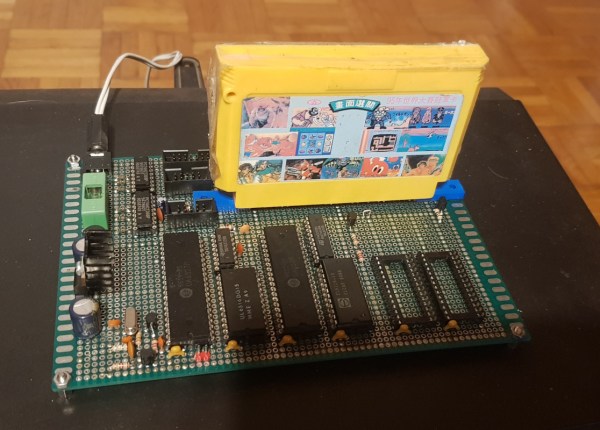
[Marek Więcek] grew up in just such a place, so the only way to play Famicom (a.k.a NES) games was to use a clone system like this one circulating in the Eastern Bloc at the time called the Pegasus which could get the job done with some tinkering. [Marek] recently came across CPU and GPU chips from this clone console and got to work building his own. Using perf board and wire he was able to test the chips and confirm they functioned properly, but had a problem with the video memory that took him a while to track down and fix.

After that, he has essentially a fully-functional Famicom that can play any cartridge around. While we hope that living in Eastern Europe still puts him far enough away to avoid getting hassled by Nintendo, we can never be too sure. Unless, of course, you use this device which lets you emulate SNES games legally.

Continue reading “Hackaday Prize 2022: An Eastern Bloc NES Clone”

Hackaday Prize 2022: Soviet Geiger Counter Gets WiFi

[Marek] has an impressive collection of old Soviet-style Geiger counters. These are handy tools to have in some specific situations, but for most of us they would be curiosities. Even so, they need some help from the modern world to work well, and [Marek] has come up with some pretty creative ways of bringing them into the 21st century. This version, for example, adds WiFi capabilities.

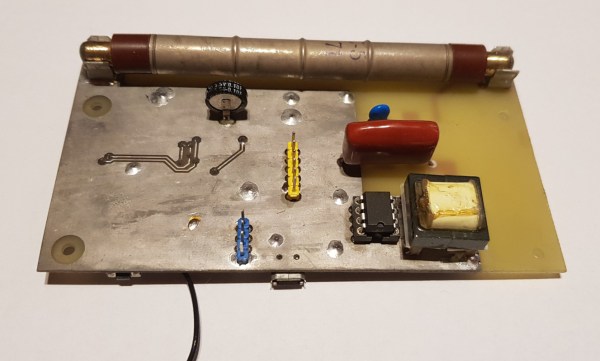
This build is based on the STS-5 Geiger tube but the real heavy lifting is handled by an ESP8266 which also provides a wireless network connection. There are some limitations to using an ESP8266 to control a time-sensitive device like a Geiger tube, especially the lack of local storage, but [Marek] solves this problem by including a real-time clock and locally caching data until a network connection is re-established. Future plans for the device include adding temperature and atmospheric temperature sensors.

Eventually this Geiger counter will be installed in a watertight enclosure outside so [Marek] can keep an eye on the background radiation of his neighborhood. Previously he was doing this with another build, but that one only had access to the network over an Ethernet cable, so this one is quite an upgrade.