Weather Warnings And Dust Detection From This Meteorological Marvel

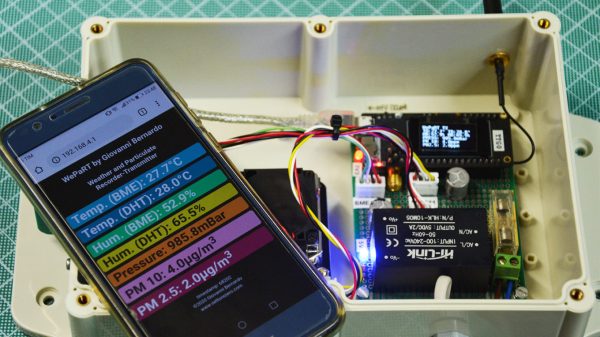
We love getting our weather in a flurry of different methods, but have you tried building your own sensor suite to harvest the data for you? [Giovanni ‘CyB3rn0id’ Bernardo] needed to monitor isolated locations outside the reach of WiFi. His ray of hope is an ESP32 controller coupled with a LoRa module to beam data to a remote station that can access the cloud.
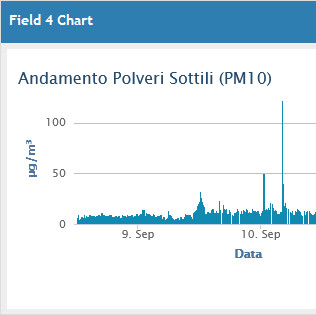
In addition to radios, he poured a deluge of sensors into the base station to read the temperature, barometric pressure, humidity, and fine dust. Why monitor dust as part of weather data collection? Particulate matter has a huge effect on air quality, something of great interest during a respiratory pandemic. For those readers near wildfires, quantifying your air quality (both indoors and out) is certainly of interest. [Giovanni] is using an SDS011 air quality sensor and has a long writeup just on this part. It uses a fan to move air past a laser-based sensing mechanism.

At the base station, live readings are shown on an OLED screen, but you can also connect to the ESP32 through your phone like a hotspot. If you keep a memory card installed, it will cache the readings in a perpetually-updated CSV file. In regular operation, the LoRa module overcasts the telemetry to its sister unit that acts as a Wifi/LoRa bridge so anyone can view gauges and graphs in real-time on ThingSpeak.

We want to shower [CyB3rn0id] with praise for seeing the cirrus serious impact of harmful dust and making something that can alert people. We don’t want to rain on anyone’s parade, but sometimes it is better to stay inside.
Toy O-Scope Is Dope

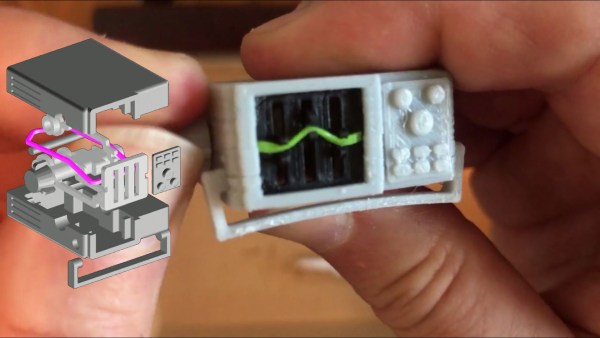
Not many of our childhood doll and action figure’s accessories revolved around lab equipment except maybe an Erlenmeyer flask if they were a “scientist.” No, they tended to be toasters, vehicles, and guns. When we were young, our heroes made food, drove sexy automobiles, and fought bad guys. Now that we’re older, some of our heroes wield soldering irons, keyboards, and oscilloscopes. [Adrian Herbez] made a scale model oscilloscope that outshines the beakers and test tube racks of yesteryear. Video also shown below. Continue reading “Toy O-Scope Is Dope”

Infinity Mirror At Warp Speed

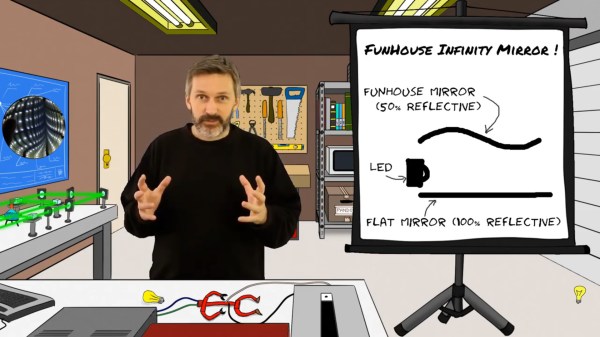
Inventing often combines more than one old ideas into a new one. Even when the fused things are similar, the result can be more valuable than the sum of its parts. Unlike those analog watches with a digital clock below the face, when [Mojoptix] combined the re-reflecting properties of an infinity mirror with the image twisting qualities of a funhouse mirror, we get more than just a pair of mirrors. The resulting images look like a lot of fun. Warping one surface of two parallel mirrors doesn’t just alter the result a bit, because the planes feed off each other’s view, the final product is an exponentially skewed show.

Our host mounts a 3D printed ring with an hubward-facing strip of LEDs to an ordinary glass mirror. Over that, he designs four mated plates that hold semi-reflective film sheets in different shapes. The first is a hyperbolic paraboloid, but it’s probably easier to think of it as shaped like a Pringles chip (crisp). Once the light is applied, it looks like a bowtie made by a deranged god or the start of an infinite rabbit hole of light and reflection. To further the madness, he hits us with four shapes at once, so we hope you’ll take a moment to enjoy the video below.

This guy is no stranger to optics, and we’ve reported on a couple of other cool inventions that teach a concept through demonstration. His precision calipers demonstrate the MoirĂ© effect, and his digital sundial capitalizes on parallel light beams.

Continue reading “Infinity Mirror At Warp Speed”

Give Me A Minute, My Eyes Are Busy

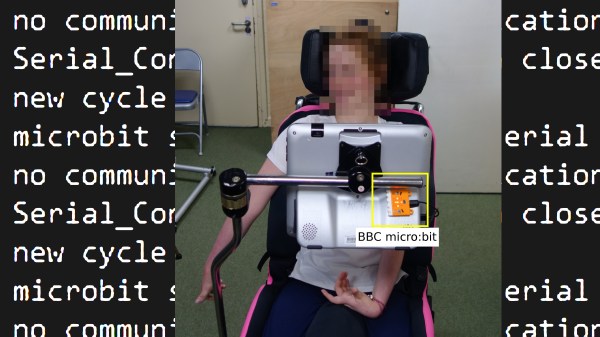
Social cues are tricky, but humans are very good at detecting where someone is looking; that goes a long way toward figuring out where someone is placing their attention. All of this goes right out the window though, when you’re talking with somebody who uses eye-tracking software to speak. [Matthew Oppenheim] with Lancaster University, UK wants to give listeners the message of Give Me a Minute with an easy-to-recognize indicator. His choice is a microBit, which displays a rotating arrow on the LED array while someone composes their speech. He chose the microBit because they are readily available, and you can get cases to fit people’s personalities. After the break, you can see a demonstration, but the graphic appears scrambled because of the screen flicker. The rotating arrow is a clear indicator that someone is writing, whereas a clock might suggest a frozen computer, and a progress bar could not be accurate.

[Matthew] wrote a program for the interpreting computer which recognizes when a message is forming by monitoring the number of black pixels in the composition field. If it changes, someone must be composing a sentence. Many people will try to peek over the speaker’s shoulder and see if they are working, but we’re sure that most readers would join the users of such tech in being unhappy if someone blatantly looks at theirr computer screen while they are typing.

Wheelchairs don’t always have to come from a hospital or supply store, and they don’t have to stay on the ground.

Continue reading Give Me A Minute, My Eyes Are Busy”

Peripheral Doesn’t Need Deskspace

Some of us are suckers for new hardware. There’s absolutely nothing shameful about a drawer overflowing with gamepads, roll-up keyboards, and those funny-shaped ergonomic mice. MyTeleTouch won’t sate your itch for new hardware because [Dimitar Danailov] didn’t design hardware you hold, because it uses your phone as a catch-all Human Interface Device, HID. A dongle plugs into a standard USB port, and your Android phone can emulate a USB keyboard, mouse, or gamepad over Bluetooth.

Chances are high that you already set up your primary computer with your favorite hardware, but we think we’ve found a practical slant for a minimalist accessory. Remember the last time you booted an obsolete Windows desktop and dug out an old mouse with a questionable USB plug? How long have you poked around the bottom of a moving box trying to find a proprietary wireless keyboard dongle, when you just wanted to type a password on your smart TV? What about RetroPi and a game controller? MyTeleTouch isn’t going to transform your daily experience, but it’ll be there when you don’t want to carry a full-size keyboard down three flights of stairs to press {ENTER} on a machine that spontaneously forgot it has a touch screen. If you don’t have opportunities to play the hero very often, you can choose to play the villain. Hide this in a coworker’s USB port, and while they think you’re sending a text message, you could be fiddling with their cursor.

We enjoy a good prank that everyone can laugh off, and we love little keyboards and this one raises the (space) bar.

Continue reading “Peripheral Doesn’t Need Deskspace”

Friendly Fiberglassing: Can Hide Glue Replace Epoxy?

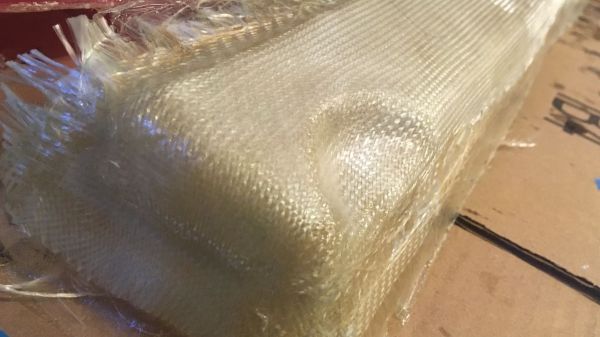
Hide glue has been around for thousands of years, and some of it is holding wood pieces three thousand years after application. It is made from animal protein, so vegetarians may want to stick to the petroleum-based adhesives. [Surjan Singh] wanted to see if its longevity made it a contender with modern epoxy by casting a couple of fiberglass car parts with the competing glues. In short, it doesn’t hold up in this situation, but it is not without merit.

Musical instrument makers and antique restorers still buy and use hide glue, but you would never expose it to heat or moisture. To its credit, hide glue doesn’t require a ventilator. All you need is boiling water and a popsicle stick, and you are in business. [Surjan] writes his findings like a narrative rather than steps, so his adventures are a delight to read. He found that a car part made with fiberglass and epoxy will withstand the weather better than the alternative because heat and humidity will soften hide glue. His Saab 96 isn’t the right application, but since it is nearly as strong as epoxy once set, you could make other fabric shapes, like a flannel nightstand or a lace coffee table, and you could shape them in the living room without toxifying yourself

No matter how you want to work with glues and substrates, Bil Herd has you covered, and here is an excellent tip for a cheap degassing setup.

Eye-Catching And Crumb-Suspending

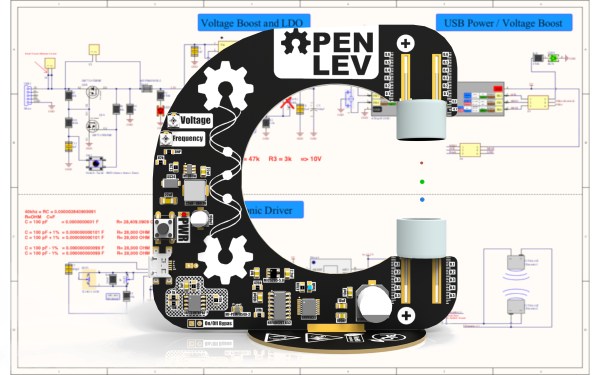
Printed circuit boards used to be green or tan, and invariably hidden. Now, they can be artful, structural, and like electronic convention badges, they are the entire project. In this vein, we find Open LEV, a horseshoe-shaped desktop bauble bristling with analog circuitry supporting an acoustic levitator. [John Loefler] is a mechanical engineer manager at a college 3D printing lab in Florida, so of course, he needs to have the nerdiest stuff on his workspace. Instead of resorting to a microcontroller, he filled out a parts list with analog components. We have to assume that the rest of his time went into making his PCB show-room ready. Parts of the silkscreen layer are functional too. If you look closely at where the ultrasonic transducers (silver cylinders) connect, there are depth gauges to aid positioning. Now that’s clever.

Continue reading “Eye-Catching And Crumb-Suspending”