Upgrading A MIDI Controller With An FPGA

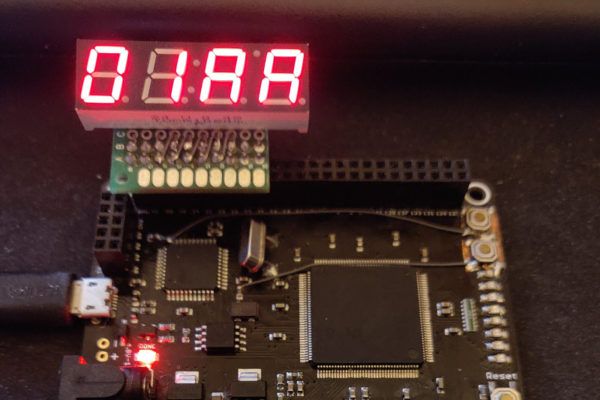
While the “M” in MIDI stands for “musical”, it’s possible to use this standard for other things as well. [s-ol] has been working on a VJ setup (mixing video instead of music) using various potentiometer-based hardware and MIDI to interface everything together. After becoming frustrated with drift in the potentiometers, he set out to outfit the entire rig with custom-built encoders.

[s-ol] designed the rotary-encoder based boards around an FPGA. It monitors the encoder for changes, controls eight RGB LEDs per knob, and even does capacitive touch sensing on the aluminum knob itself. The FPGA communicates via SPI with an Arduino master controller which communicates to a PC using a serial interface. This is [s-ol]’s first time diving into an FPGA project and it looks like he hit it out of the park!.

Even if you’re not mixing video or music, these encoders might be useful to any project where a standard analog potentiometer isn’t accurate or precise enough, or if you just need something that can dial into a specific value quickly. Potentiometers fall short in many different ways, but if you don’t want to replace them you might modify potentiometers to suit your purposes.

Continue reading “Upgrading A MIDI Controller With An FPGA”

Maps To SMS, When You’re Really Far Away

GPS is available on most smart phones, which is all well and good unless you drive out into a place with weak service. Unless you want to go into the before-time and buy a standalone GPS (and try to update the maps every so often) or go even further back and print out MapQuest directions, you’ll need another solution to get directions. Something like this project which sends Google Maps directions over SMS.

The project is called RouteMe by [AhadCove]. It runs on a Raspberry Pi at his home which is constantly monitoring an email inbox. Using Google Voice to forward incoming text messages as emails to the Pi, the system works when your phone has a cell signal but no data connection. The Pi listens for specific commands in that SMS-to-Email connection and is able to send directions back to the phone via text message. That’s actually a neat hack you may remember from the olden days where you can send email as SMS using the phone number as the address.

If you find yourself lost in the woods with just your phone often enough, [AhadCove] has all of the code and detailed directions on how to set this up on his GitHub site. But don’t discount this particular task, anything you can script on the Pi can now be controlled via SMS without relying on a service like Twilio.

This maps hack is a pretty ingenious solution to a problem that more than a few of us have had, and it uses a lot of currently-available infrastructure to run as well. If you want another way of navigating without modern tech, have a go at dead reckoning in a car.

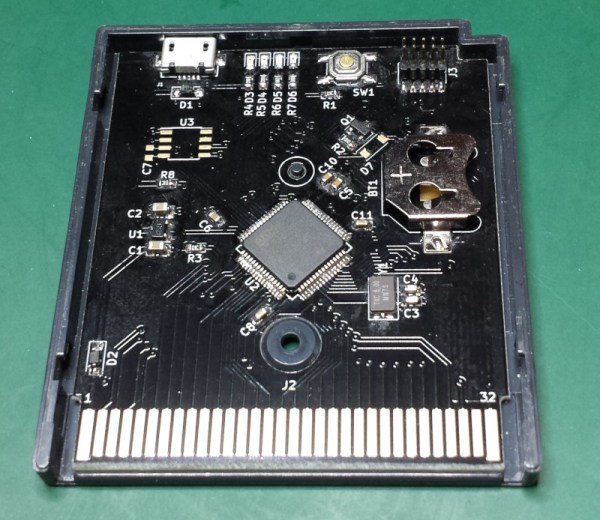
Tiny ESP32 Fits Inside USB-A Connector

The ESP32 was introduced a few years ago as an inexpensive way to outfit various microcontrollers with WiFi or Bluetooth. Since then it has been experimented with and developed on, thanks to its similarities to the ESP8266 and the ability to easily program it. Watching the development of this small chip has truly been fascinating as it continues to grow. Or, in this case, shrink.

The latest development in the ESP32 world comes from [femtoduino] who, as the name suggests, makes very small things. This one is a complete ESP32 which fits inside a USB-A connector. The brains of the projects is the ESP32-D2WD which is a dual core chip with 2 Mb of memory, making it more than capable. In fact, a big part of this project was [femtoduino]’s modifications to MicroPython in order to allow it to run on this chipset. For that alone, it’s cool.

This project is impressive for both reasons, both the size and the addition to the MicroPython libraries. If you need something really really tiny, for whatever reason, you might want to look into picking up one of these. Be careful though, and be sure to get the latest version of the SDK.

Finally Run Useful Apps On A Windows Phone

Not every piece of technology or software can succeed, even with virtually unlimited funding and marketing. About the same number of people are still playing Virtual Boys as are using Google Plus, for example. In recent memory, the Windows Phone occupies the same space as these infamous failures, potentially because it was late to the smartphone game but primarily because no one wanted to develop software for it. But now, you can run Android apps on Windows Phones now. (Google Translate from German)

To be clear, this doesn’t support all Android apps or all Windows Phones, and it will take a little bit of work to get it set up at all. But if you still have one laying around you might want to go grab it. First you’ll need to unlock the phone, and then begin sending a long string of commands to the device which sends the required software to the device. If that works, you can begin loading Android apps on the phone via a USB connection to a PC.

This hack came to us via Windows Central and Reddit. It seems long and involved but if you have any experience with a command line you should be fine. It’s an interesting way to get some more use out of your old Windows Phone if it’s just gathering dust in a closet somewhere. If not, don’t worry; Windows Phones were rare even when they were at their most popular. We could only find one project in our archives that uses one, and that was from 2013.

Build Your Own Solenoid Engine

A solenoid engine is a curiosity of the electrical world. By all measures, using electricity to rotate something can be done almost any other way with greater efficiency and less hassle. But there’s just something riveting about watching a solenoid engine work. If you want to build one of your own and see for yourself, [Emiel] aka [The Practical Engineer] has a great how-to.

For this build though he used a few tools that some of us may not have on hand, such as a lathe and a drill press. The lathe was used to make the plastic spool to hold the wire, and also to help wind the wire onto the spool itself rather than doing it by hand. He also milled the wood mounts and metal bearings as well, and the quality of the work really shows through in the final product. The final touch is the transistor which controls power flow to the engine.

If you don’t have all of the machine tools [Emiel] used it’s not impossible to find substitute parts if you want to build your own. It’s an impressive display piece, or possibly even functional if you want your build to have a certain steampunk aesthetic (without the steam). You can even add more pistons to your build if you need extra power.

Continue reading “Build Your Own Solenoid Engine”

Helicopter Chain Saw

Among the most dangerous jobs in the United States are timberjack and aircraft pilot. Combining the two wouldn’t sound like a recipe for success, but in fact it makes the job of trimming trees near pipelines and power lines much safer. That’s what this helicopter-suspended chainsaw does. And it definitely doesn’t look safe, either, but here we are.

The saw is equipped with ten two-foot diameter saws and is powered by a 28 horsepower engine which is separate from the helicopter itself. The pilot suspends the saw under the helicopter and travels along the trees in order to make quick work of tree branches that might be growing into rights-of-way. It’s a much safer (and faster) alternative that sending out bucket trucks or climbers to take care of the trees one-by-one.

Tree trimming is an important part of the maintenance of power lines especially which might get overlooked by the more “glamarous” engineering aspects of the power grid. In fact, poor maintentance of vegitation led to one of the largest blackouts in recent history and is a contributing factor in a large number of smaller power outages. We can’t argue with the sentiment around the saw, either.

Control Lighting Effects Without Programming

Working in a theater or night club often requires a specialized set of technical skills that you might not instantly think about. Sure, the audio system needs to be set up and managed but the lighting system is often actively managed as well. For simple setups, this is usually not too difficult to learn. With more complicated systems you will need to get elbow-deep into some software. With [trackme518]’s latest tool, though, you will only need to be able to edit video.

Sure, this sounds like just trading one piece of software for another, but it’s more likely that professionals working in lighting will already know how to edit video rather than know programming or complicated proprietary lighting software. All you have to do to control a set of lights is to create a video, or use an existing one, and the lighting system will mimic the video on its own. If you do know programming, though, it’s written in Processing Java so changes aren’t too difficult to make.

The software (available on the project’s GitHub page) will also work outside of a professional environment, as well. It’s set up to work with DMX systems as well as LED strips so you could use it to run a large LED display board using only an input video as control. You could even use it to run the display on your guitar.

Photo courtesy of Rob Sinclair (Gribiche) [CC BY-SA 2.0 (https://creativecommons.org/licenses/by-sa/2.0)]