Modular Blocks Help Fight Disease

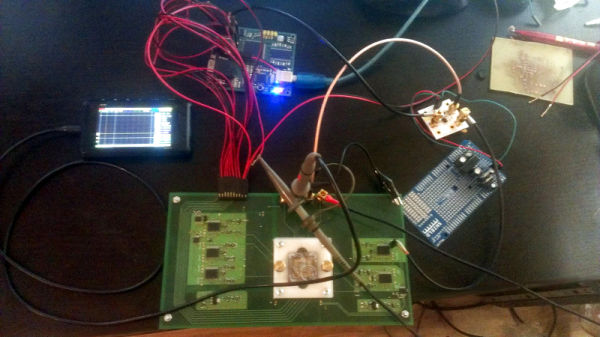
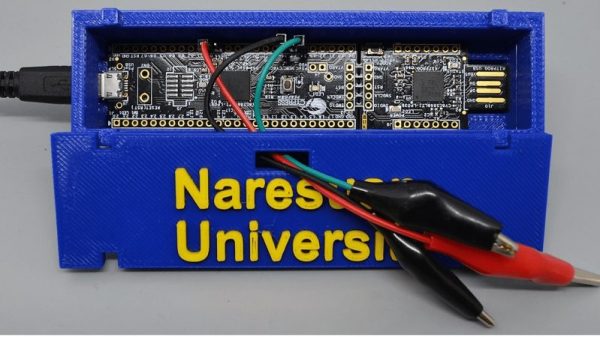
When engineering a solution to a problem, an often-successful approach is to keep the design as simple as possible. Simple things are easier to produce, maintain, and use. Whether you’re building a robot, operating system, or automobile, this type of design can help in many different ways. Now, researchers at MIT’s Little Devices Lab have taken this philosophy to testing for various medical conditions, using a set of modular blocks.

Each block is designed for a specific purpose, and can be linked together with other blocks. For example, one block may be able to identify Zika virus, and another block could help determine blood sugar levels. By linking the blocks together, a healthcare worker can build a diagnosis system catered specifically for their needs. The price tag for these small, simple blocks is modest as well: about $0.015, or one and a half cents per block. They also don’t need to be refrigerated or handled specially, and some can be reused.

This is an impressive breakthrough that is poised to help not only low-income people around the world, but anyone with a need for quick, accurate medical diagnoses at a marginal cost. Keeping things simple and modular allows for all kinds of possibilities, as we recently covered in the world of robotics.

Continue reading “Modular Blocks Help Fight Disease”

More Details On That First Home-Made Lithographically Produced IC

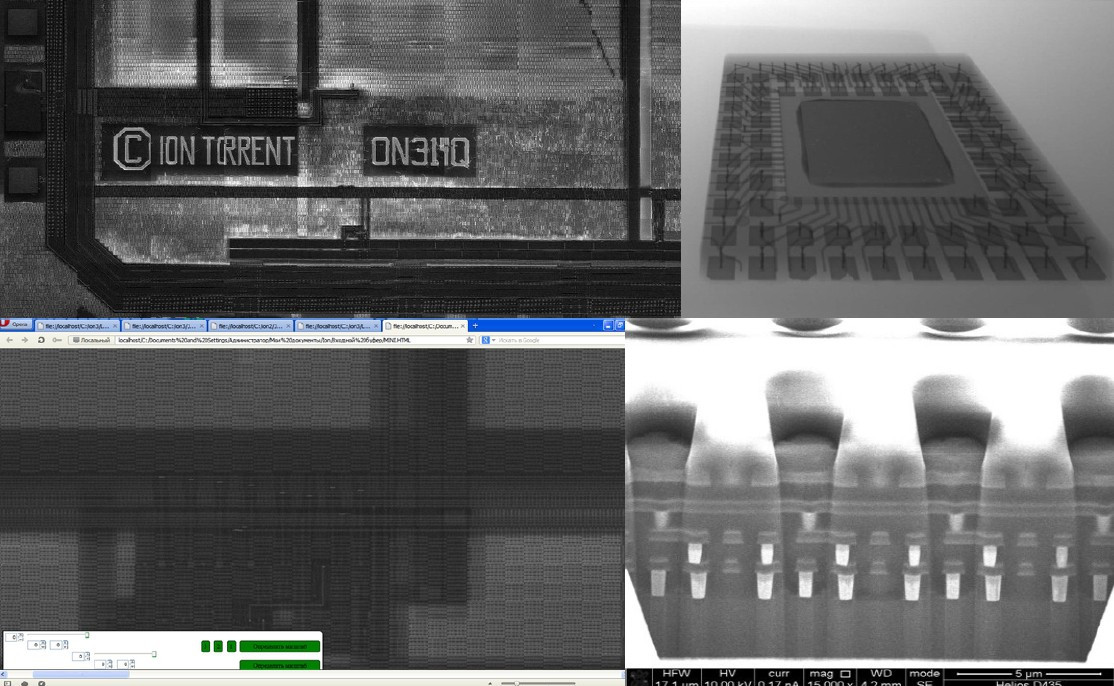
A few days ago we brought you news of [Sam Zeloof]’s amazing achievement, of creating the first home-made lithographically produced integrated circuit. It was a modest enough design in a simple pair of differential amplifiers and all we had to go on was a Twitter announcement, but it promised a more complete write-up to follow. We’re pleased to note that the write-up has arrived, and we can have a look at some of the details of just how he managed to produce an IC in his garage. He’s even given it a part number, the Zeloof Z1.

For ease of manufacture he’s opted for a PMOS process, and he is using four masks which he lists as the active/doped area, gate oxide, contact window, and top metal. He takes us through 66 different processes that he performs over the twelve hours of a full production run, with comprehensive descriptions that make for a fascinating run-down of semiconductor manufacture for those of us who will never build a chip of our own but are still interested to learn how it is done. The chip’s oblong dimensions are dictated by the constraints of an off-the-shelf Kyocera ceramic chip carrier, though without a wire bonding machine he’s unable to do any more than test it with probes.

You can read our reporting of his first announcement, but don’t go away thinking that will be all. We’re certain [Sam] will be back with more devices, and can’t wait to see the Z2.

First Lithographically Produced Home Made IC Announced

It is now six decades since the first prototypes of practical integrated circuits were produced. We are used to other technological inventions from the 1950s having passed down the food chain to the point at which they no longer require the budget of a huge company or a national government to achieve, but somehow producing an integrated circuit has remained out of reach. It’s the preserve of the Big Boys, move on, there’s nothing to see here.

Happily for us there exists a dedicated band of experimenters keen to break that six-decade dearth of home-made ICs. And now one of them, [Sam Zeloof], has made an announcement on Twitter that he has succeeded in making a dual differential amplifier IC using a fully lithographic process in his lab. We’ve seen [Jeri Ellsworth] create transistors and integrated circuits a few years ago and he is at pains to credit her work, but her interconnects were not created lithographically, instead being created with conductive epoxy.

For now, all we have is a Twitter announcement, a promise of a write-up to come, and full details of the lead-up to this momentous event on [Sam]’s blog. He describes both UV lithography using a converted DLP projector and electron beam lithography using his electron microscope, as well as sputtering to deposit aluminium for on-chip interconnects. We’ve had an eye on his work for a while, though his progress has been impressively quick given that he only started amassing everything in 2016. We look forward to greater things from this particular garage.

What’s The Deal With Transparent Aluminum?

It looks like a tube made of glass but it’s actually aluminum. Well, aluminum with an asterisk beside it — this is not elemental aluminum but rather a material made using it.

We got onto the buzz about “transparent aluminum” as a result of a Tweet from whence the image above came. This Tweet was posted by [Jo Pitesky], a Science Systems Engineer at the Jet Propulsion Lab in Pasadena. [Jo] reported that at a recent JPL technology open house she had the chance to handle a tube of material that looks for all the world like a section of glass tubing, but was billed as transparent aluminum. [Jo] tweeted this because it was an interesting artifact that few people get to play with and she’s right, this is fascinating!

The the material itself is intriguing, and I immediately had practical questions like what is this stuff? What is it good for? How is it made? And is it really aluminum rendered transparent by some science fiction process?

Continue reading “What’s The Deal With Transparent Aluminum?”

Reverse Engineering Bottle Threads For Fun And Profit

Recently, one of [Eric]’s clients asked him to design a bottle. Simple enough for a product designer, except that the client needed it to thread into a specific type of cap. And no, they don’t know the specs.

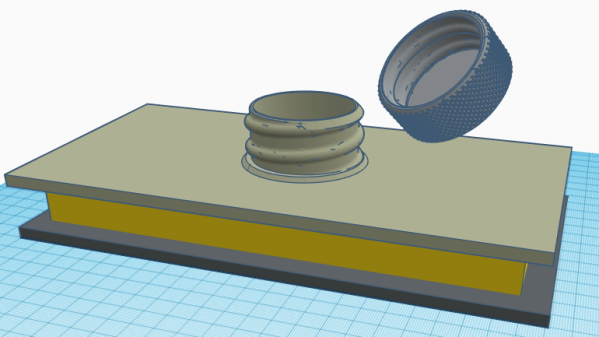
But that’s no problem, thought [Eric] as he turned on the exhaust fan and reached for the secret ingredient that would make casting the negative image of the threads a breeze. He mixed up the foul-smelling body filler with the requisite hardener and some lovely cyan toner powder and packed it into the cap with a tongue depressor. Then he capped off the cast by adding a small PVC collar to lengthen the cast so he has something to grab on to when it’s time to take it out.

Bondo does seem like a good choice for casting threads. You need something workable enough to twist out of there without breaking, but rigid enough that the small detail of the threads isn’t lost. For the release agent, [Eric] used Johnson’s Paste Wax. He notes from experience that it works particularly well with Bondo, and even seems to help it cure.

Once the Bondo hardened, [Eric] made sure it screwed in and out of the cap and then moved on to CAD modeling and 3D printing bottle prototypes until he was satisfied. We’ve got the video screwed in after the break to cap things off.

Did you know that you can also use toner powder to tint your epoxy resin? Just remember that it is particulate matter, and take precautions.

Continue reading “Reverse Engineering Bottle Threads For Fun And Profit”

Better Beer Through Gene Editing

As much as today’s American beer drinker seems to like hoppy IPAs and other pale ales, it’s a shame that hops are so expensive to produce and transport. Did you know that it can take 50 pints of water to grow enough hops to produce one pint of craft beer? While hops aren’t critical to beer brewing, they do add essential oils and aromas that turn otherwise flat-tasting beer into delicious suds.

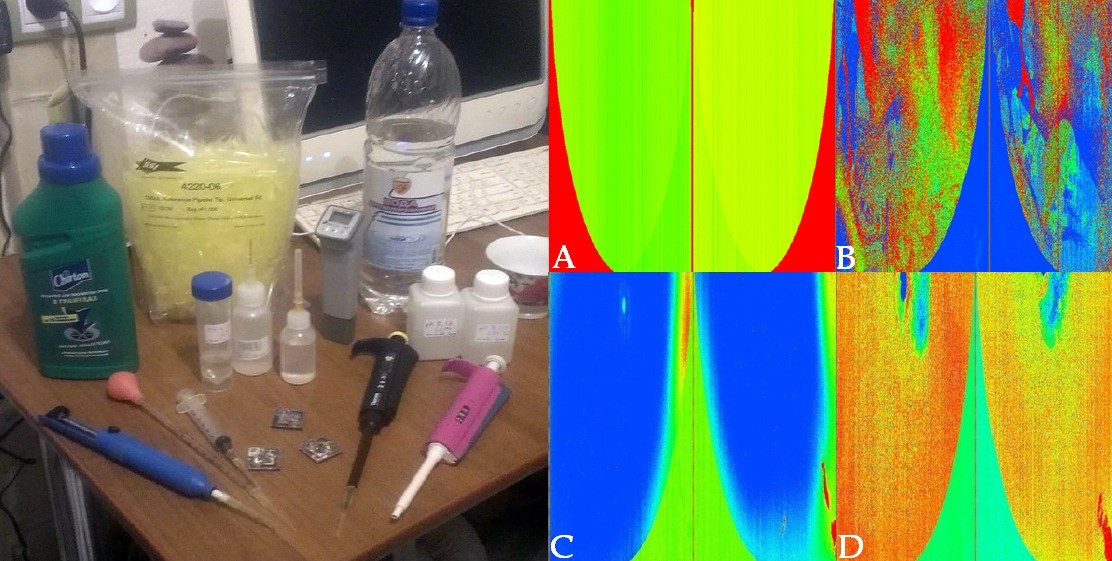
Using UC Berkley’s own simple and affordable CRISPR-CaS9 gene editing system, researchers [Charles Denby] and [Rachel Li] have edited strains of brewer’s yeast to make it taste like hops. These modified strains both ferment the beer and provide the hoppy flavor notes that beer drinkers crave. The notes come from mint and basil genes, which the researchers spliced in to yeast genes along with the CaS9 protein and promoters that help make the edit successful. It was especially challenging because brewer’s yeast has four sets of chromosomes, so they had to do everything four times. Otherwise, the yeast might reject the donor genes.

So, how does it taste? A group of employees from a nearby brewery participated in a blind taste test and agreed that the genetically modified beer tasted even hoppier than the control beer. That’s something to raise a glass to. Call and cab and drive across the break for a quick video.

Have you always wanted to brew your own beer, but don’t know where to start? If you have a sous vide cooker, you’re in luck.

Continue reading “Better Beer Through Gene Editing”

Carbon Augmented Spider Silk

Some of the creepy-crawlers under our feet, flitting through the air, and waiting on silk webs, incorporate metals into their rigid body parts and make themselves harder. Like Mega Man, they absorb the metals to improve themselves. In addition to making their bodies harder, silk-producing creatures like worms and spiders can spin webs with augmented properties. These silks can be conductive, insulating, or stronger depending on the doping elements.

At Italy’s University of Trento, they are pushing the limits and dosing spiders with single-wall carbon nanotubes and graphene. The carbon is suspended in water and sprayed into the spider’s habitat. After the treatment, the silk is measured, and in some cases, the silk is significantly tougher and surpasses all the naturally occurring fibers.

Commercial spider silk harvesting hasn’t been successful, so maybe the next billionaire is reading this right now. Let’s not make aircraft-grade aluminum mosquitoes though. In fact, here’s a simple hack to ground mosquitoes permanently. If you prefer your insects alive, maybe you also like their sound.

Thank you for the tip, [gippgig].