Science fiction movies often portray horticulture in the future, be it terrestrial or aboard spacecraft, with hydroponic gardens overflowing with leafy greens and brightly colored fruit. There is no soil, just clear water that hints at future-people creating a utopia of plant strains untethered from their earthly roots.
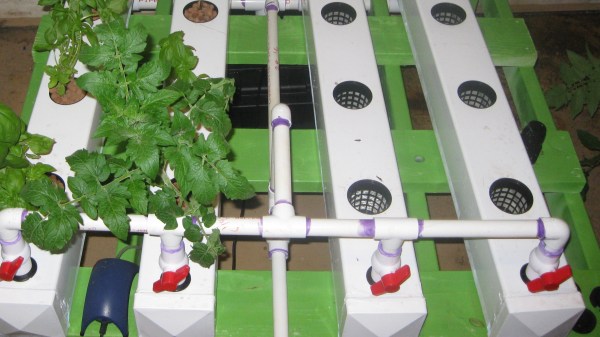
This star-faring food production method is not fiction if you forego the polycarbonate tubing, neon accent lights, and gardening robots. For his 2020 Hackaday Prize entry, [AVR] shares how he creates a bed for sixteen plants with parts sourced at a nearby home-improvement store. It may lack the visual pizzaz of the Hollywood versions, but it will grow soil-less crops on a hacker budget.
The starting point for this build is a sturdy wooden base. The PVC tubing and fence parts on top are light, but the water inside them will get heavy, and if you grow large plants, they become surprisingly heavy. Speaking of water, the sub-category of hydroponics this falls under is Nutrient Film Technique, or NFT, which uses a shallow stream of water laden with all the nutrients for plant growth. The square fence posts provide a flat top for mounting mesh cups where the plants grow and a flat bottom where the stream continuously flows. A basin and pump keep the plants refreshed and fed until they are ready for harvest.





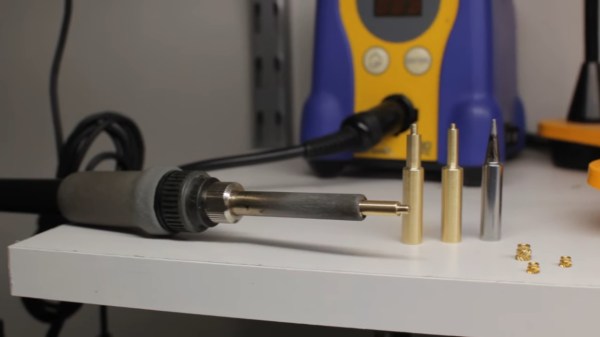
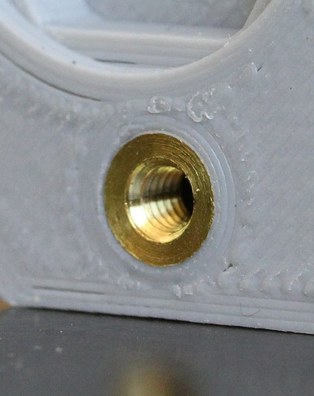 Like many of us, [Sean] has embraced the use of heat-set threaded inserts to beef up the mechanical connections on his 3D-printed parts. [Sean] dedicated a soldering iron to the task, equipping it with a tip especially for the job. But it was the flavor of iron proverbially known as a “fire stick” and he found that this iron was too hot for PLA prints. As the new owner of a lathe, he was able to make quick work of the job using a piece of brass rod stock. Luckily, Hakko tips just slip on the heating element, so no threading operations were needed. [Sean] made insert tips for multiple sized inserts, and the results speak for themselves.