International Space Station Is Racing The Clock After Soyuz Failure

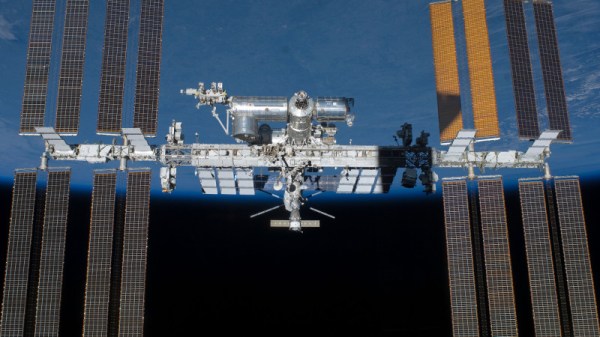
Today’s failed Soyuz launch thankfully resulted in no casualties, but the fate of the International Space Station (ISS) is now in question.

Just two minutes after liftoff, the crew of the Soyuz MS-10 found themselves in a situation that every astronaut since the beginning of the manned space program has trained for, but very few have ever had to face: a failure during launch. Today the crew of two, Russian Aleksey Ovchinin and American Nick Hague, were forced to make a ballistic re-entry into the Earth’s atmosphere; a wild ride that put them through higher G forces than expected and dropped the vehicle approximately 430 km from the launch site in Baikonur. Both men walked away from the event unharmed, but while the ordeal is over for them, it’s just beginning for the crew of the ISS.

Until a full investigation can be completed by Roscosmos, Russia’s space agency, the Soyuz rocket is grounded. This is standard procedure, as they obviously don’t want to launch another rocket and risk encountering the same issue. But as the Soyuz is currently the only way we have to get humans into space, this means new crew can’t be sent to the ISS until Roscosmos is confident the issue has been identified and resolved.

Soyuz MS-11, which would have brought up three new crew members to relieve those already on the Station, was scheduled for liftoff on December 20th. While not yet officially confirmed, that mission is almost certainly not going to be launching as scheduled. Two months is simply not long enough to conduct an investigation into such a major event when human lives are on the line.

The failure of Soyuz MS-10 has started a domino effect which will deprive the ISS of the five crew members which were scheduled to be aboard by the end of 2018. To make matters worse, the three current crew members must return to Earth before the end of the year as well. NASA and Roscosmos will now need to make an unprecedented decision which could lead to abandoning the International Space Station; the first time it would be left unmanned since the Expedition 1 mission arrived in November 2000.

Continue reading “International Space Station Is Racing The Clock After Soyuz Failure” →

I Ate A Robot Hamburger Before The Restaurant Went Out Of Business

The future is upon us and the robots will soon take over. Automated cars will put Uber drivers and cabbies alike out of work. Low-wage workers, like the people working behind the counter at McDonalds, will be replaced by burger-flipping robots. The entire operation of Spacely Space Sprockets, Inc. is run by a single man, pressing a single button, for four hours a day. This cartoon future is so fully automated that most people are unemployed, and all productive work is done by robots.

The first jobs to be replaced will be the first jobs teenagers get. These are low skill jobs, and when you think about low skill jobs (certainly not low-effort jobs, by the way), you think of flipping burgers. That’s where Creator comes in. They’re a culinary robotics company with a restaurant in San Francisco. They’ve been profiled by NPR, by Business Insider, and by CNBC. TechCrunch got a sneak preview proclaiming this as the future of the six dollar burger. It is a marvel of engineering prowess with a business model that I don’t think checks out. This is not the robot that will take your job, and I’m proud to say I ate a robot hamburger before the restaurant went out of business.

Continue reading “I Ate A Robot Hamburger Before The Restaurant Went Out Of Business” →

This Year’s Nobel Prizes Are Straight Out Of Science Fiction

In the 1966 science fiction movie Fantastic Voyage, medical personnel are shrunken to the size of microbes to enter a scientist’s body to perform brain surgery. Due to the work of this year’s winners of the Nobel Prize in Physics, laser tools now do work at this scale.

Arthur Ashkin won for his development of optical tweezers that use a laser to grip and manipulate objects as small a molecule. And Gérard Mourou and Donna Strickland won for coming up with a way to produce ultra-short laser pulses at a high-intensity, used now for performing millions of corrective laser eye surgeries every year.

Here is a look at these inventions, their inventors, and the applications which made them important enough to win a Nobel.

Continue reading “This Year’s Nobel Prizes Are Straight Out Of Science Fiction” →

Google Discovers Google+ Servers Are Still Running

Google is pulling the plug on their social network, Google+. Users still have the better part of a year to say their goodbyes, but if the fledgling social network was a ghost town before, news of its imminent shutdown isn’t likely to liven the place up. A quick check of the site as of this writing reveals many users are already posting their farewell messages, and while there’s some rallying behind petitions to keep the lights on, the majority realize that once Google has fallen out of love with a project there’s little chance of a reprieve.

To say that this is a surprise would be disingenuous. We’d wager a lot of you already thought it was gone, honestly. It’s no secret that Google’s attempt at a “Facebook Killer” was anything but, and while there was a group of dedicated users to be sure, it never attained anywhere near the success of its competition.

According to a blog post from Google, the network’s anemic user base isn’t the only reason they’ve decided to wind down the service. A previously undisclosed security vulnerability also hastened its demise, a revelation which will particularly sting those who joined for the privacy-first design Google touted. While this fairly transparent postmortem allows us to answer what ended Google’s grand experiment in social networking, there’s still one questions left unanswered. Where are the soon to be orphaned Google+ users supposed to go?

Continue reading “Google Discovers Google+ Servers Are Still Running” →

Hack My House: Running Raspberry Pi Without An SD Card

Many of us have experienced the pain that is a Raspberry Pi with a corrupted SD card. I suspect the erase-on-write nature of flash memory is responsible for much of the problem. Regardless of the cause, one solution is to use PXE booting with the Raspberry Pi 3. That’s a fancy way to say we’ll be booting the Raspberry Pi over the network, instead of from an SD card.

What does this have to do with Hacking My House? As I discussed last time, I’m using Raspberry Pi as Infrastructure by building them into the walls of every room in my house. You don’t want to drag out a ladder and screwdriver to swap out a misbehaving SD card, so booting over the network is a really good solution. I know I promised we’d discuss cabling and cameras. Think of this as a parenthetical article — we’ll talk about Ethernet and ZoneMinder next time.

So let’s dive in and see what the Preboot Execution Environment (PXE) is all about and how to use PXE with Raspberry Pi.

Continue reading “Hack My House: Running Raspberry Pi Without An SD Card” →

Will Drones And Planes Be Treated As Equals By FAA?

Soon, perhaps even by the time you read this, the rules for flying remote-controlled aircraft in the United States will be very different. The Federal Aviation Authority (FAA) is pushing hard to repeal Section 336, which states that small remote-controlled aircraft as used for hobby and educational purposes aren’t under FAA jurisdiction. Despite assurances that the FAA will work towards implementing waivers for hobbyists, critics worry that in the worst case the repeal of Section 336 might mean that remote control pilots and their craft may be held to the same standards as their human-carrying counterparts.

Section 336 has already been used to shoot down the FAA’s ill-conceived attempt to get RC pilots to register themselves and their craft, so it’s little surprise they’re eager to get rid of it. But they aren’t alone. The Commercial Drone Alliance, a non-profit association dedicated to supporting enterprise use of Unmanned Aerial Systems (UAS), expressed their support for repealing Section 336 in a June press release:

Basic ‘rules of the road’ are needed to manage all this new air traffic. That is why the Commercial Drone Alliance is today calling on Congress to repeal Section 336 of the FAA Modernization and Reform Act of 2012, and include new language in the 2018 FAA Reauthorization Act to enable the FAA to regulate UAS and the National Airspace in a common sense way.

With both the industry and the FAA both pushing lawmakers to revamp the rules governing small remote-controlled aircraft, things aren’t looking good for the hobbyists who operate them. It seems likely those among us with a penchant for airborne hacking will be forced to fall in line. But what happens then?

Continue reading “Will Drones And Planes Be Treated As Equals By FAA?” →

How Precise Is That Part? Know Your GD&T

How does a design go from the computer screen to something you hold in your hand? Not being able to fully answer this question is a huge risk in manufacturing because . One of the important tools engineers use to ensure success is Geometric Dimensioning and Tolerancing (GD&T).

A good technical drawing is essential for communicating your mechanical part designs to a manufacturer. Drafting, as a professional discipline, is all about creating technical drawings that are as unambiguous as possible, and that means defining features explicitly. The most basic implementation of that concept is dimensioning, where you state the distance or angle between features. A proper technical drawing will also include tolerances for those dimensions, and I recently explained how to avoid the pitfall of stacking those tolerances.

Dimensions and tolerances alone, however, don’t tell the complete story. On their own, they don’t specify how closely the geometric form of the manufactured part needs to adhere to your perfect, nominal representation. That’s what we’re going to dig into today with GD&T.

Continue reading “How Precise Is That Part? Know Your GD&T” →