Fallout Watch Build Triumphs In Adverse Conditions

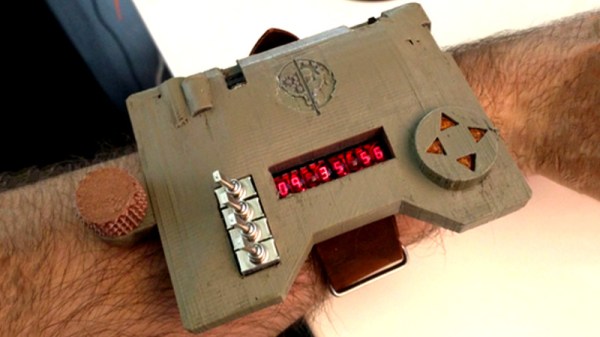
Is it a badge? Is it a watch? Well, it’s [Sarif’s] take on a wrist-mounted computer from the Fallout series, so you’re free to choose your own designation! We think the Brotherhood of Steel would be proud to have this piece of kit.

[Sarif] commenced the build after first getting their feet wet with the pipman, a watch inspired by Metro 2033 and Steins;;gate as much as Bethesda’s popular post-apocalyptic RPG. It features all the fruit – GPS, compass, a TV-B-Gone – and perhaps the coolest feature, long-since-deprecated bubble LED displays and flippy switches for that Altair-esque charm.

The build log is full of details, from the components used and the debugging battles involved in the journey. [Sarif] learned about using transistors, burning up a few along the way – some say setting the lab on fire is the quickest way to learn important lessons, anyway. On top of that, there were some software niggles but in the end, the watchputer made it to DEFCON 26 anyway!

Builds like this that start from limited experience and go deep into the trials and tribulations involved are an excellent way to learn about what goes into the average DIY electronics project, particularly when talking about embedded systems. And if you’re keen to check out the work of [Sarif’s] contemporaries, we’ve got a collection of all the awesome badges from DEFCON 26. Enjoy!
Electronic hub barrette diagram

Hair Is Good Electronic Hub Real Estate

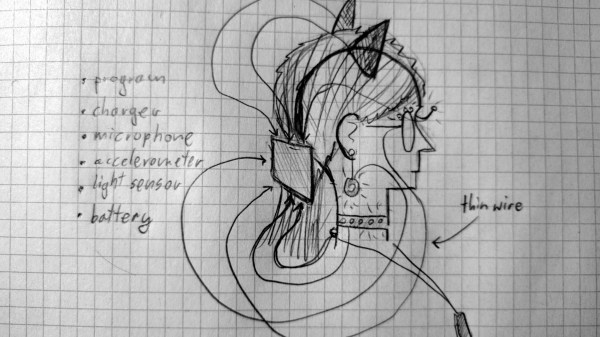
When it comes to wearables, there are a few places you can mount rechargeable batteries and largish circuit boards. Certainly, badges hanging from a lanyard are a favorite here on Hackaday. A belt is another option. [deshipu] has come up with a good location on your head, provided you have long hair that is. That’s the hair clasp or barrette. It can support a hefty mass, be relatively large, and doesn’t touch your skin.

Plusing LEDs barretteHis plan gets even better, namely to use it as a hub for other electronics on your head, giving as examples: mechatronic ears and LEDs on eyelashes, earrings, and neck collars. We’d include some sort of heads-up display on glasses too or perhaps some playful glasses windshield wipers.

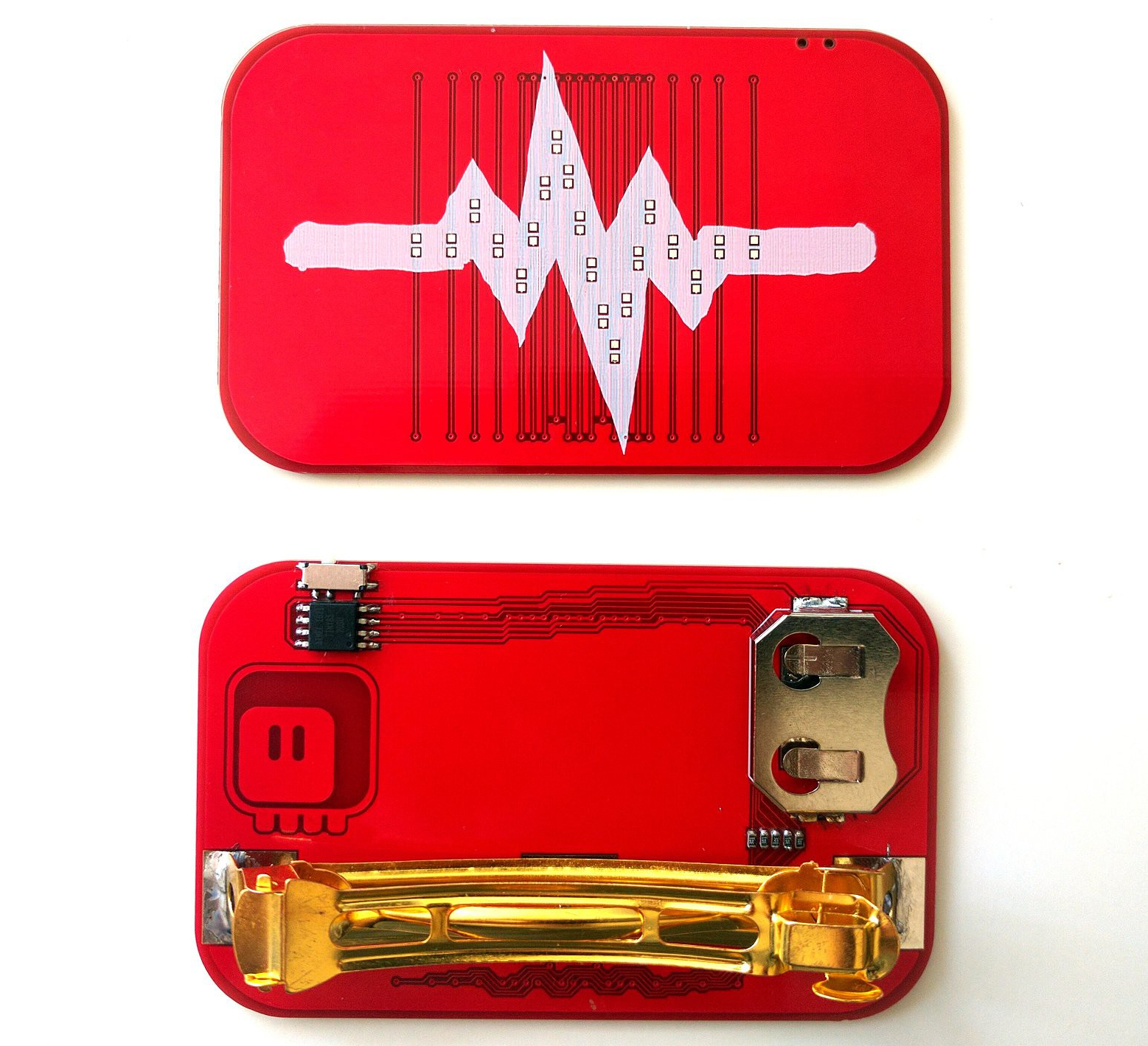
Being able to solder the clasp to the circuit board was his first success and he’s since made a test barrette with pulsing LEDs which he’s distributed to others for evaluation. We really like his electronic hub idea and look forward to seeing where he takes it. For now, he’s done enough to have become a finalist in the Hackaday Human Computer Interface Challenge.

Serpentine: multi-purpose hand gesture sensor

There Are Multiple Ways To Gesture With This Serpentine Sensor

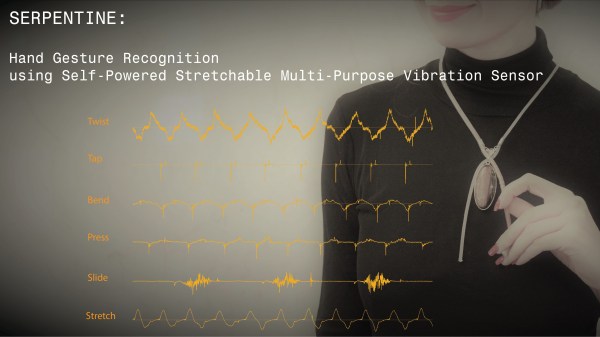
Serpentine is a gesture sensor that’s the equivalent of a membrane potentiometer, flex and stretch sensor, and more.  It’s self-powering and can be used in wearable hacks such as the necklace shown in the banner image though we’re thinking more along the lines of the lanyard for Hackaday conference badges, adding one more level of hackability. It’s a great way to send signals without anyone else knowing you’re doing it and it’s easy to make.

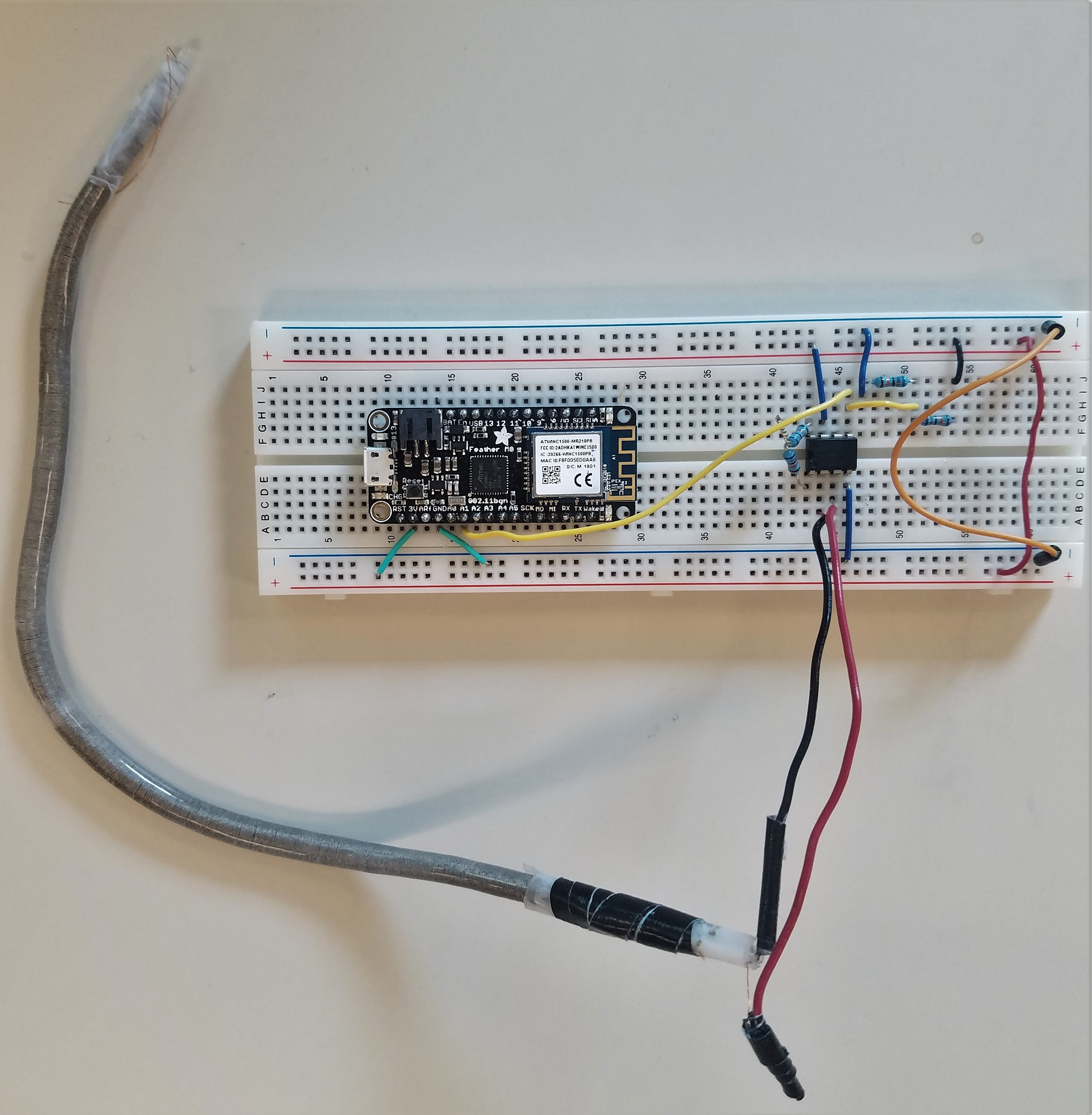
Collecting analog data from Serpentine

Serpentine is the core of a research project by a group of researchers including [fereshteh] of Georgia Tech, Atlanta. The sensor is a tube made of a silicone rubber and PDMS (a silicone elastomer) core with a copper coil wrapped around it, followed by more of the silicone mix, a coil of silver-coated nylon thread, and a final layer of the silicone mix. Full instructions for making it are on their Hackaday.io page.

There are three general interactions you can have with the tube-shaped sensor: radial, longitudinal, and tangential. Doing various combinations of these three results in a surprising variety of gestures such as tap, press, slide, twist, stretch, bend, and rotate. Those gestures result in signals across the copper and silver-coated nylon electrodes. The signals pass through an amplifier circuit which uses WiFi to send them on to a laptop where signal processing distinguishes between the gestures. It recognizes the different ones with around 90% accuracy. The video below demonstrates the training step followed by testing.

Serpentine works as a result of the triboelectric nanogenerator (TENG) phenomenon, a mix of the triboelectric effect and electrostatic induction but fabrics can be made which use other effects too. One example is this fabric keyboard and theremin which works in part using the piezoelectric effect.

Continue reading “There Are Multiple Ways To Gesture With This Serpentine Sensor”

I Hear You Offer WiFi

We are swimming in radio transmissions from all around, and if you live above the ground floor, they are coming at you from below as well. Humans do not have a sensory organ for recognizing radio signals, but we have lots of hardware which can make sense of it. The chances are good that you are looking at one such device right now. [Frank Swain] has leaped from merely accepting the omnipresent signals from WiFi routers and portable devices to listening in on them. The audio signals are mere soundwaves, so he is not listening to every tweet and email password, merely a representation of the data’s presence. There is a sample below the break, and it sounds like a Geiger counter playing PIN•BOT.

We experience only the most minuscule sliver of information coming at us at any given moment. Machines to hack that gap are not had to find on these pages so [Frank] is in good company. Magnetosensory is a popular choice for people with a poor sense of direction. Echolocation is perfect for fans of Daredevil. Delivering new sensations could be easier than ever with high-resolution tactile displays. Detect some rather intimate data with ‘SHE BON.’

Continue reading “I Hear You Offer WiFi”

‘SHE BON’ Is An Artful, Wearable, Sensual, Sensing Platform

SHE BON (that’s the French bon, or “good”) is an ambitious project by [Sarah Petkus] that consists of a series of wearable electronic and mechanical elements which all come together as a system for a single purpose: to sense and indicate female arousal. As a proponent of increased discussion and openness around the topic of sexuality, [Sarah]’s goal is to take something hidden and turn it into something obvious and overt, while giving it a certain artful flair in the process.

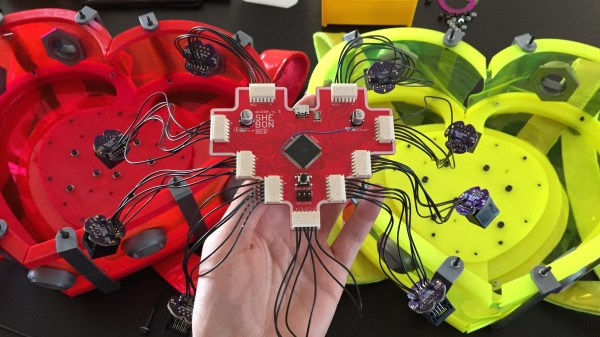
The core of the system is a wearable backpack in the shape of a heart, from which all other sensors and feedback elements are connected. A lot of thought has gone into the design of the system, ensuring that the different modules have an artistic angle to their feedback while also being comfortable to actually wear, and [Sarah] seems to have a knack for slick design. Some of the elements are complete and some are still in progress, but the system is well documented with a clear vision for the whole. It’s an unusual and fascinating project, and was one of the finalists selected in the Human Computer Interface portion of the 2018 Hackaday Prize. Speaking of which, the Musical Instrument Challenge is underway, so be sure check it out!

Open Source Paramotor Using Quadcopter Tech

Have you ever dreamed of flying, but lack the funds to buy your own airplane, the time to learn, or the whole hangar and airstrip thing? The answer might be in a class of ultralight aircraft called powered paragliders, which consist of a soft inflatable wing and a motor on your back. As you may have guessed, the motor is known as a paramotor, and it’s probably one of the simplest powered aircraft in existence. Usually little more than big propeller, a handheld throttle, and a gas engine.

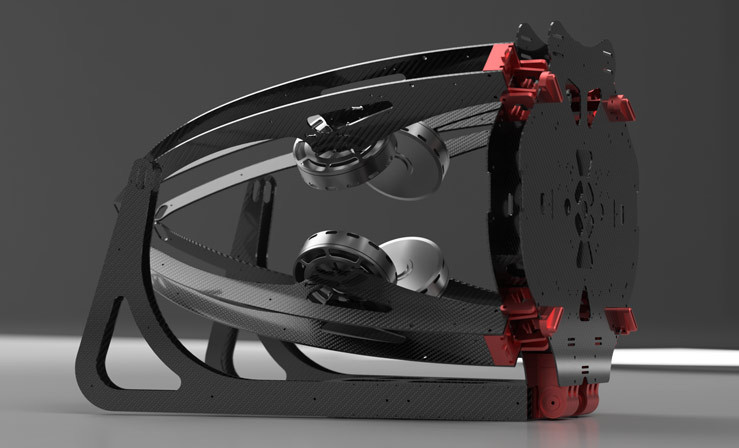
But not always. The OpenPPG project aims to create a low-cost paramotor with electronics and motors intended for heavyweight multicopters. It provides thrust comparable to gas paramotors for 20 to 40 minutes of flight time, all while being cheaper and easier to maintain. The whole project is open source, so if you don’t want to buy one of their kits or assembled versions, you’re free to use and remix the design into a personal aircraft of your own creation.

It’s still going to cost for a few thousand USD to get a complete paraglider going, but at least you won’t need to pay hangar fees. Thanks to the design which utilizes carbon fiber plates and some clever hinges, the whole thing folds up into a easier to transport and store shape than traditional paramotors with one large propeller. Plus it doesn’t hurt that it looks a lot cooler.

Not only are the motors and speed controls borrowed from the world of quadcopters, but so is the physical layout. A traditional paramotor suffers from a torque issue, as the big propeller wants to twist the motor (and the human daring enough to strap it to his or her back) in the opposite direction. This effect is compensated for in traditional gas-powered paramotor by doing things like mounting the motor at an angle to produce an offset thrust. But like a quadcopter the OpenPPG uses counter-rotating propellers which counteract each others thrust, removing the torque placed on the pilot and simplifying design of the paraglider as a whole.

If you still insist on the fixed-wing experience, you could always get some foam board and hope for the best.

[Thanks to Luke for the tip.]

Continue reading “Open Source Paramotor Using Quadcopter Tech”

Let No Eyebrow Go Unsinged With A Wrist-Mounted Flamethrower

We’ll say it just once, and right up front: wrist-mounted flamethrowers are a bad idea. An itchy nose and a brief moment of forgetfulness while sporting one of these would make for a Really Bad Day. That said, this flaming gauntlet of doom looks like a lot of fun.

We’ve got to hand it to [Steve Hernandez] – he put a lot of work into the Flame-O-Tron 9000. Building on his prior art in the field, [Steve] went a bit further with this design. The principle is the same – butane plus spark equals fun – but the guts of this flamethrower are entirely new. A pipe bomb custom fuel tank is used rather than the stock butane can, and a solenoid valve controls fuel flow. Everything lives in a snazzy acrylic case that rides on a handmade leather bracer, and controls in the hand grip plus an Arduino allow the user to fire short bursts of flame or charge up for a real fireball. See what you think of the final product in the short video after the break; it sounds as though even if the fuel runs out, the high-voltage would make a dandy stun gun.

Maybe we should lay off the safety nagging on these wrist rockets. After all, we’ve seen many, many, many of them, with nary a report of injury.

Continue reading “Let No Eyebrow Go Unsinged With A Wrist-Mounted Flamethrower”