STEP Up Your Jetson Nano Game With These Printable Accessories

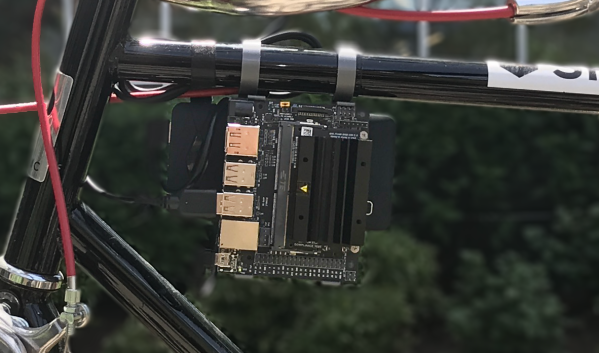
Found yourself with a shiny new NVIDIA Jetson Nano but tired of having it slide around your desk whenever cables get yanked? You need a stand! If only there was a convenient repository of options that anyone could print out to attach this hefty single-board computer to nearly anything. But wait, there is! [Madeline Gannon]’s accurately named jetson-nano-accessories repository supports a wider range of mounting options that you might expect, with modular interconnect-ability to boot!

A device like the Jetson Nano is a pretty incredible little System On Module (SOM), more so when you consider that it can be powered by a boring USB battery. Mounted to NVIDIA’s default carrier board the entire assembly is quite a bit bigger than something like a Raspberry Pi. With a huge amount of computing power and an obvious proclivity for real-time computer vision, the Nano is a device that wants to go out into the world! Enter these accessories.

At their core is an easily printable slot-and-tab modular interlock system which facilitates a wide range of attachments. Some bolt the carrier board to a backplate (like the gardening spike). Others incorporate clips to hold everything together and hang onto a battery and bicycle. And yes, there are boring mounts for desks, tripods, and more. Have we mentioned we love good documentation? Click into any of the mount types to find more detailed descriptions, assembly directions, and even dimensioned drawings. This is a seriously professional collection of useful kit.

Air Hockey Table Is A Breeze To Build

Many of us have considered buying an air hockey table, but are put off by the price. And even if the money is there, those things take up a lot of space. How often are you really going to use it?

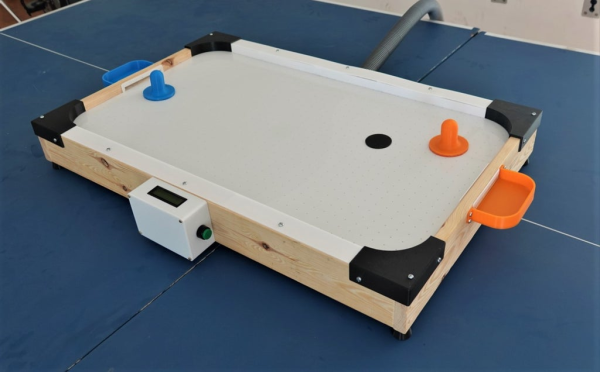
This DIY air hockey table is the answer. It’s big enough to be fun, but small and light enough to easily stow away in the off-season. At ~$50, it’s a cheap build, provided you have a vacuum cleaner that can switch to blower mode. The strikers, goals, corner guards, and scoreboard enclosure are all 3D-printed, while the pucks and playfield are laser-cut acrylic. [Technovation] glued acrylic feet to the strikers to help them last longer.

The scoreboard is an Arduino Uno plus an LCD that changes color to match the current winner. Scoring must be entered manually with button presses, but we think it would be fairly easy to detect a puck in the goal with a force or weight sensor or something. For now, the RGB LEDs around the edge are controlled separately with a remote. The ultimate goal is to make the Arduino do it. Shoot past the break and cross-check it out.

Already have a table? Had it so long, no one will play you anymore? Build yourself a robotic opponent.

Continue reading “Air Hockey Table Is A Breeze To Build”

Vintage Console Becomes The Calculator It Appears To Be

What’s sitting on [Bob Alexander]’s desk in the video below did not start out life as the desktop calculator it appears to be. Turning it into a standalone calculator with features the original designers couldn’t imagine turned out to be an interesting project, and a trip down the retrocomputing rabbit hole.

A little explanation is in order. Sure, with its Nixie display, calculator keypad, and chunky mid-century design, the Wang 360 desktop console looks like a retro calculator. But it’s actually only a dumb terminal for a much, MUCH bigger box, called the Electronic Package, that would fit under a desk. The foot-warming part that was once connected to [Bob]’s console by a thick cable that had been unceremoniously lopped off by a previous owner. [Bob] decided to remedy the situation with modern electronics. The console turned out to have enough room for a custom PCB carrying a PIC32, some level-shifting components, power supply modules that include the high-voltage supply for the Nixies, and a GPS module because Nixies and clocks just go together. The interesting bit is the programming; [Bob] chose to emulate the original Wang methods of doing math, which include multiplication by logarithmic addition. Doing so replicates the original look and feel of the calculator down to the rapid progression of numbers across the Nixies as the logarithms are calculated using the display registers.

We normally frown on vintage gear being given modern guts, but in this case [Bob] hit just the right balance of new and old, And given that the Electronic Packages these consoles were connected to go for $1500 or more on eBay, it was a better choice than letting the console go to scrap. A similarly respectful approach was taken with this TRS80 Model 100 revival.

Continue reading “Vintage Console Becomes The Calculator It Appears To Be”

NES Gets A Slick Acrylic Casemod

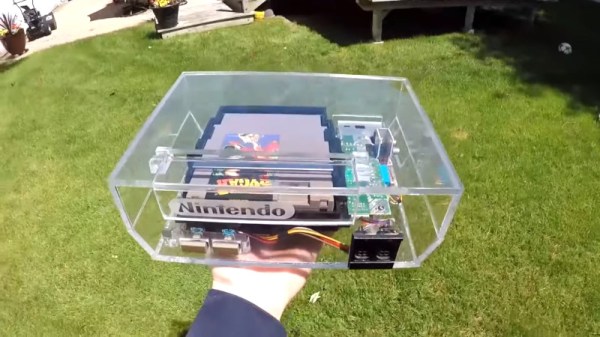
Those alive during the 1990s will remember the clear or “crystal” versions of various home consoles. Made with the usual injection molding processes, they usually came out somewhere closer to a smoky translucency and didn’t reveal much of the insides. [BitHead1000] likes to do things right though, and has busted out an awesome acrylic case mod for his NES.

The build starts with the disassembly of the original console, naturally, and the RF shielding is discarded in order to provide an unobstructed view of the internals. The acrylic case is then built up piece by piece, using the original case as a template. Flame polishing is used to treat the edges, and everything is stuck together using what appears to be acrylic cement. For a nice finishing touch, the cartridge door gets a frosted Nintendo logo, thanks to some careful work in the sandblasting booth.

The final product looks stunning, and the transparent case lends itself excellently to edge-lighting thanks to a few LEDs. We’ve seen [BitHead1000’s] work before, with the stunning flamethrowing N64 build. Video after the break.

Hackaday Links Column Banner

Hackaday Links: August 25, 2019

Doesn’t the Z-axis on 3D-printers seem a little – underused? I mean, all it does is creep up a fraction of a millimeter as the printer works through each slice. It would be nice if it could work with the other two axes and actually do something interesting. Which is exactly what’s happening in the nonplanar 3D-printing methods being explored at the University of Hamburg. Printing proceeds normally up until the end, when some modifications to Slic3r allow smooth toolpaths to fill in the stairsteps and produce a smooth(er) finish. It obviously won’t work for all prints or printers, but it’s nice to see the Z-axis finally pulling its weight.

If you want to know how something breaks, best to talk to someone who looks inside broken stuff for a living. [Roger Cicala] from LensRentals.com spends a lot of time doing just that, and he has come to some interesting conclusions about how electronics gear breaks. For his money, the prime culprit in camera and lens breakdowns is side-mounted buttons and jacks. The reason why is obvious once you think about it: components mounted perpendicular to the force needed to operate them are subject to a torque. That’s a problem when the only thing holding the component to the board is a few SMD solder pads. He covers some other interesting failure modes, too, and the whole article is worth a read to learn how not to design a robust product.

In the seemingly neverending quest to build the world’s worst Bitcoin mining rig, behold the 8BitCoin. It uses the 6502 processor in an Apple ][ to perform the necessary hashes, and it took a bit of doing to port the 32-bit SHA256 routines to an 8-bit platform. But therein lies the hack. But what about performance? Something something heat death of the universe…

Contributing Editor [Tom Nardi] dropped a tip about a new online magazine for people like us. Dubbed Paged Out!, the online quarterly ‘zine is a collection of contributed stories from hackers, programmers, retrocomputing buffs, and pretty much anyone with something to say. Each article is one page and is formatted however the author wants to, which leads to some interesting layouts. You can check out the current issue here; they’re still looking for a bunch of articles for the next issue, so maybe consider writing up something for them – after you put it on Hackaday.io, of course.

Tipline stalwart [Qes] let us know about an interesting development in semiconductor manufacturing. Rather than concentrating on making transistors smaller, a team at Tufts University is making transistors from threads. Not threads of silicon, or quantum threads, or threads as a metaphor for something small and high-tech. Actual threads, like for sewing. Of course, there’s plenty more involved, like carbon nanotubes — hey, it was either that or graphene, right? — gold wires, and something called an ionogel that holds the whole thing together in a blob of electrolyte. The idea is to remove all rigid components and make truly flexible circuits. The possibilities for wearable sensors could be endless.

And finally, here’s a neat design for an ergonomic utility knife. It’s from our friend [Eric Strebel], an industrial designer who has been teaching us all a lot about his field through his YouTube channel. This knife is a minimalist affair, designed for those times when you need more than an X-Acto but a full utility knife is prohibitively bulky. [Eric’s] design is a simple 3D-printed clamshell that holds a standard utility knife blade firmly while providing good grip thanks to thoughtfully positioned finger depressions. We always get a kick out of watching [Eric] design little widgets like these; there’s a lot to learn from watching his design process.

Thanks to [JRD] and [mgsouth] for tips.

Glia Is Making Open Medical Devices, And You Can Help

The Glia project aims to create a suite of free and open-source medical equipment that can be assembled cheaply and easily when and where it’s needed. Even essential tools like stethoscopes and tourniquets can be difficult to acquire in certain parts of the world, especially during times of war or civil unrest. But armed with a 3D printer and the team’s open-source designs, an ad-hoc factory can start producing these lifesaving tools anywhere on the planet.

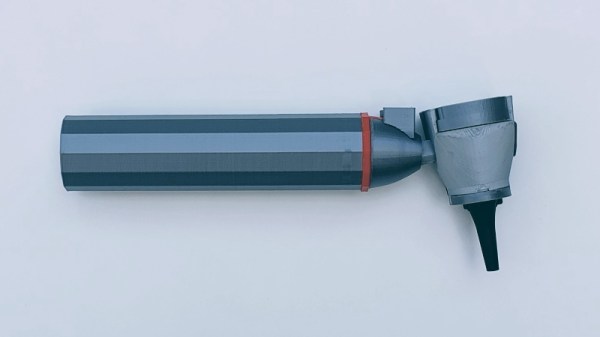
Glia member [Tarek Loubani] has recently written a blog post discussing the team’s latest release: an otoscope that can be built for as little as $5. Even if you don’t recognize the name, you’ve almost certainly seen one of them in use. The otoscope is used to look inside the ear and can be invaluable in diagnosing illnesses, especially in children. Unfortunately, while this iconic piece of equipment is quite simple on a technical level, professional-quality versions can cost hundreds of dollars.

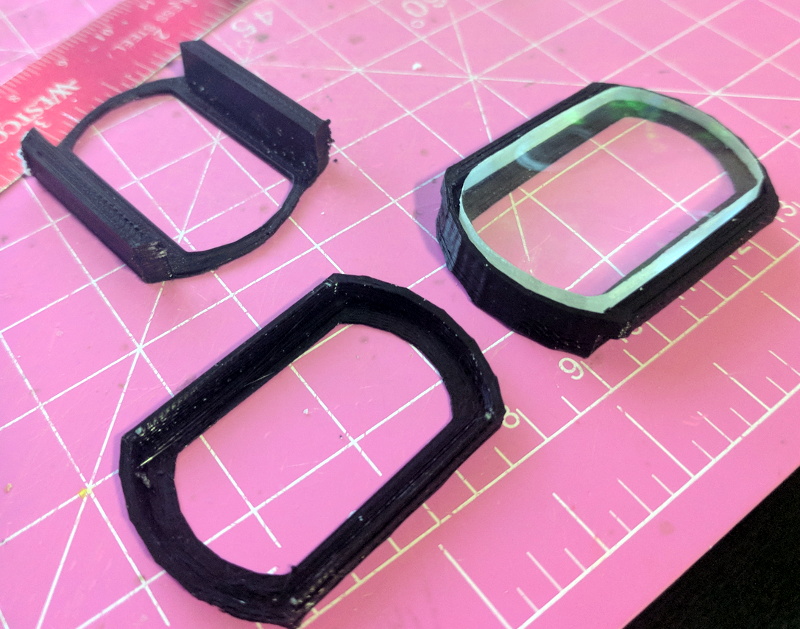
Now to be fair, you’ll need quite a bit more than just the 3D printed parts to assemble the device. The final product requires some electrical components such as a battery holder, rocker switch, and LED. It also requires a custom lens, though the Glia team has thought ahead here and provided the files for printable jigs that will allow you to cut a larger lens down to the size required by their otoscope. In a situation where you might have to improvise with what you have, that’s a very clever design element.

So far the team is very happy with how the otoscope performs, but they’ve run into a bit of a logistical snag. It turns out that early work on the project was done in the web-based TinkerCAD, which isn’t quite in line with the team’s goals of keeping everything free and open. They’d like some assistance in recreating the STLs in FreeCAD or OpenSCAD so they’re easier to modify down the road. So if you’re a FOSS CAD master and want to earn some positive karma, head over to the GitHub page for the project and put those skills to use.

We’ve previously covered Glia’s work with 3D printed tourniquets to treat gunshot wounds, a project that led to [Tarek] himself being shot by a sniper while attempting to field test the design in Gaza. If that’s not commitment to the principles of open-source hardware, we don’t know what is.

Continue reading “Glia Is Making Open Medical Devices, And You Can Help”

Lead Former Makes LED Cubes A Little Easier To Build

There’s no doubting the allure of a nicely crafted LED cube; likewise, there’s no doubting that they can be a tremendous pain to build. After all, the amount of work scales as the cube of the number of LEDs you want each side to have, and let’s face it – with LED cubes, the bigger, the better. What to do about all that tedious lead forming?

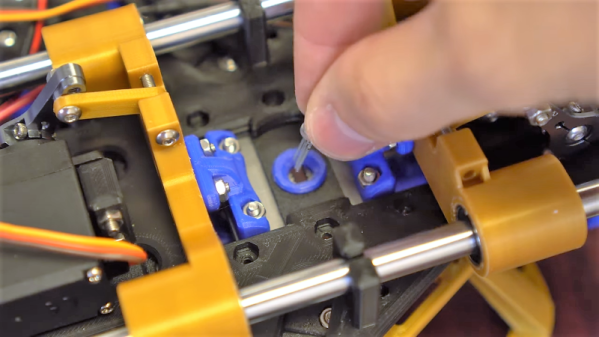
[TylerTimoJ]’s solution is a custom-designed lead-forming tool, and we have to say we’re mighty impressed by it. His LED cubes use discrete RGB LEDs, the kind with four leads, each suspended in space by soldering them to wires. For the neat appearance needed to make such a circuit sculpture work, the leads must be trimmed and bent at just the right angles, a tedious job indeed when done by hand. His tool has servo-controlled jaws that grip the leads, with solenoid-actuated lead formers coming in from below to bend each lead just the right amount. The lead former, along with its companion trimmer, obviously went through a lot of iterations before [TylerTimoJ] got everything right, but we’d say being able to process thousands of LEDs without all the tedium is probably worth the effort.

We’re looking forward to the huge LED cubes this tool will enable. Perhaps this CNC wire bender and an automated wire cutter would come in handy for the supporting wires?

Continue reading “Lead Former Makes LED Cubes A Little Easier To Build”